
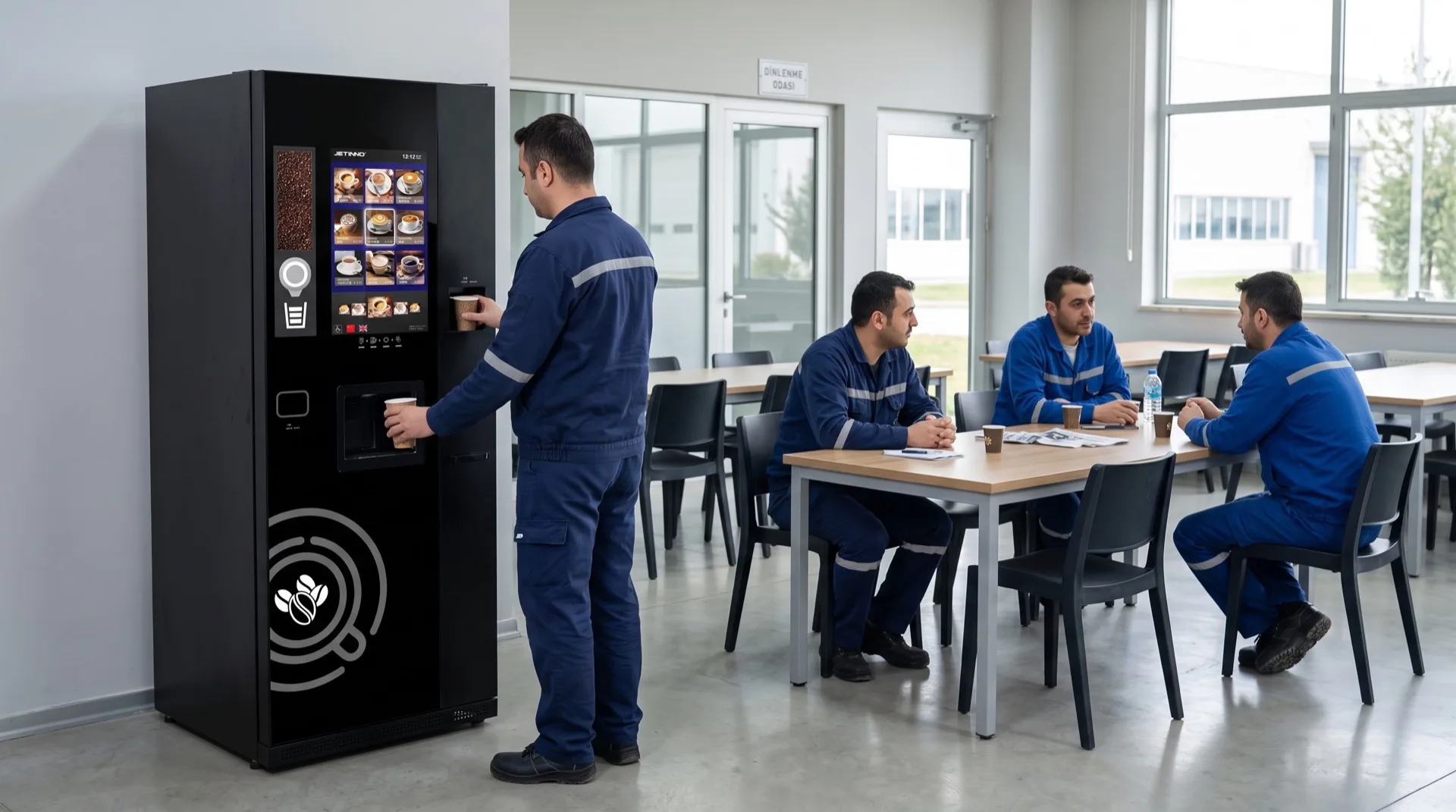
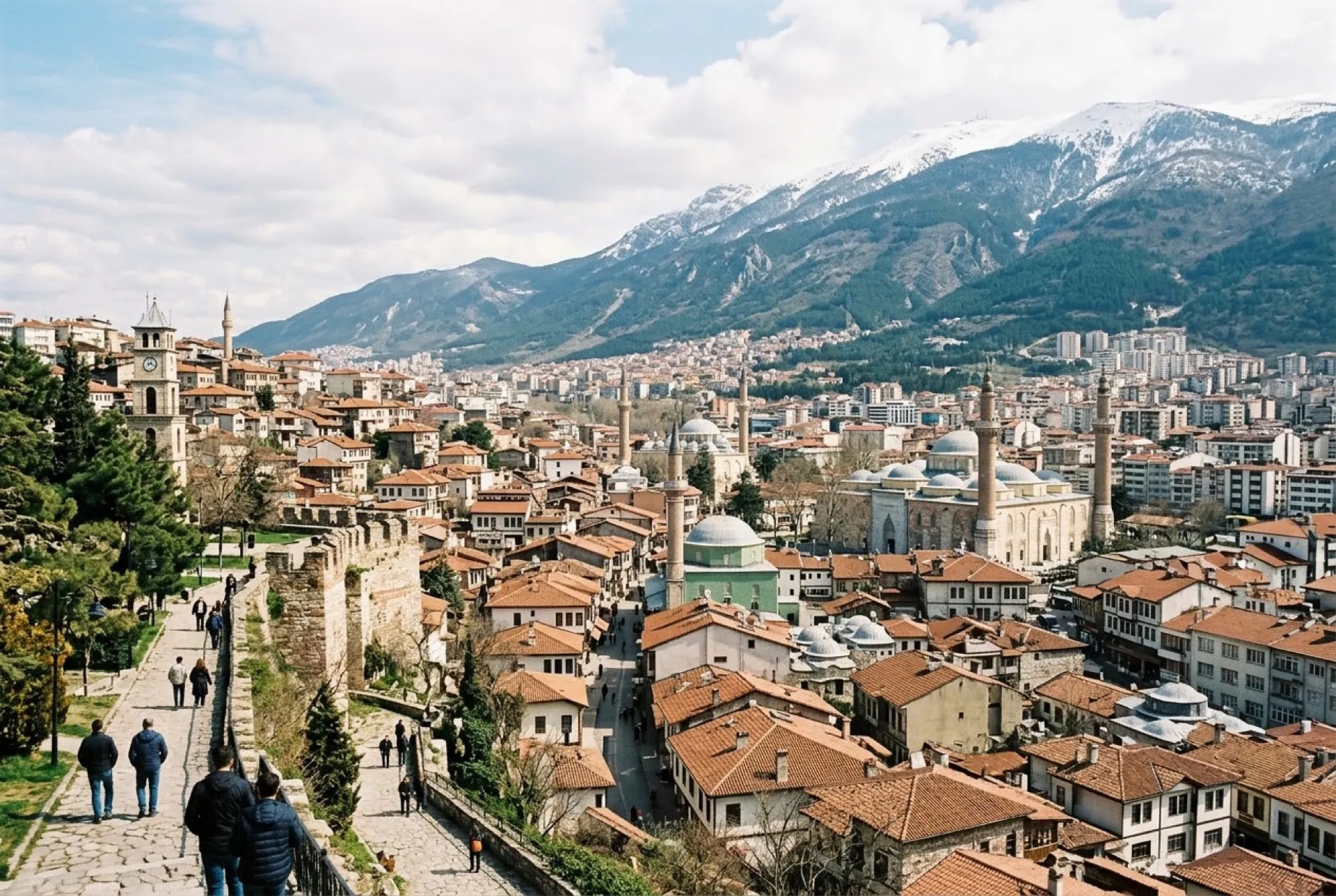
If you manage a site where people pass through in shifts, you already know the small daily problem: the nearest decent cup of coffee is a walk away, and the tea break eats twenty minutes of the working day. A coffee vending machine in Bursa solves that inside the building, on the floor where people actually work. The city runs on automotive and textile production, with long shifts in the organized industrial zones and a large student population at Uludağ University, so demand for fast coffee, tea and hot chocolate is steady from early morning until the night shift ends.
Where a Coffee Vending Machine Pays for Itself
Placement decides everything. The machine should sit where people already queue or wait: at a factory canteen entrance in Nilüfer, beside a locker room in Demirtaş, in the lobby of a textile plant, at a hospital or clinic corridor, in a university faculty building, or in the service area of a bus terminal and metro exit. Offices in central districts work too, but the strongest traffic comes from shift-based workplaces where the same 200 people take three or four breaks a day.
What matters is footfall and dwell time. A machine in a corridor nobody uses will sell a few cups. The same machine next to a time clock or a staff entrance sells continuously. If you are unsure, we look at your layout, shift pattern and headcount before recommending anything.
Choosing the Right Jetinno JL300 Configuration
The Jetinno JL300 is a floor-standing fully automatic machine. It grinds beans fresh for each cup and also brews tea and hot chocolate, so one unit covers the whole break menu. The touch screen carries 8 to 12 drinks, and payment can run on coins, tokens, banknotes, bank card and contactless, or QR code, depending on what your site needs.
Capacity is the main decision. Configurations range from 40 up to 250 cups per refill. A small office or clinic reception is comfortable with the lower end. A factory canteen or a university building with constant traffic needs the larger canister set, otherwise someone is refilling twice a day. The machine only needs a standard 220V socket, and a water tank version is available if there is no plumbing point nearby, which is common in older industrial buildings.
- 40 to 80 cups: small offices, clinics, showrooms, service counters
- 100 to 150 cups: factory canteens, textile workshops, faculty buildings
- 180 to 250 cups: large plants in the organized industrial zones, transport hubs, hospitals
Telemetry and remote monitoring come as part of the setup. We see sales, stock levels and any technical warning online, so refills and service visits are planned before the machine stops working.
Two Ways to Get a Machine: Rental Partnership or Purchase
Under the rental partnership model you invest nothing. CoffeeVar installs the machine, stocks it, maintains it and operates it. You provide the space and the power socket, and you receive 20% of sales, roughly 18,000 per month at typical traffic. The contract runs two years and you can follow sales online at any time. With a cup cost of 12–20 and a sale price of 80–120, a site averaging 30–60 cups a day turns over about 90,000 per month, and payback on the equipment is 6–12.
If you prefer to own the asset and keep the full margin, direct purchase is available at 7,200 USD per machine, with a 2-year warranty. This suits businesses that already run a canteen operation or want the machine on their own balance sheet.
| Item | Rental partnership | Purchase |
|---|---|---|
| Upfront investment | 0 | 7,200 USD |
| Who operates and refills | CoffeeVar | You |
| Your income | 20% of sales | Full sales margin |
| Contract | 2 years | None |
| Warranty | Covered by operator | 2 years |
Delivery, Installation and Service
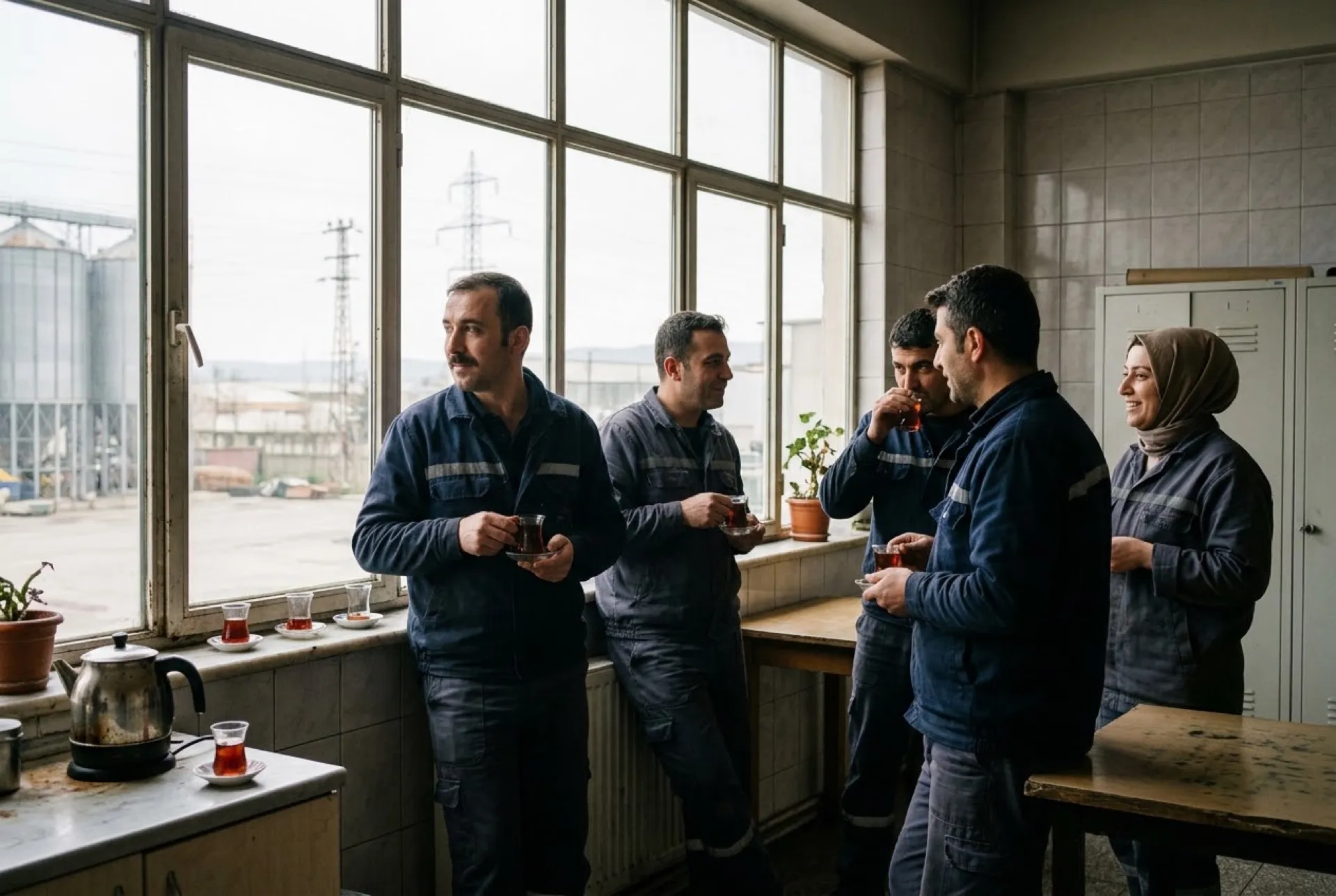
Delivery and installation across Turkey take about 72 hours after the contract is signed, and this city is covered on the same schedule. Our service engineers are based in the main cities, so a technical issue is handled by a local visit rather than a shipment back to a depot. For plants in Nilüfer or Demirtaş, installation is usually scheduled outside peak shift hours so production is not interrupted.
We also handle the practical details: menu setup, cup sizes, sugar and milk options, and the payment mix that fits your staff. If your people mostly carry cards, contactless and QR code lead the setup. If they carry cash, coins and banknotes stay active.