
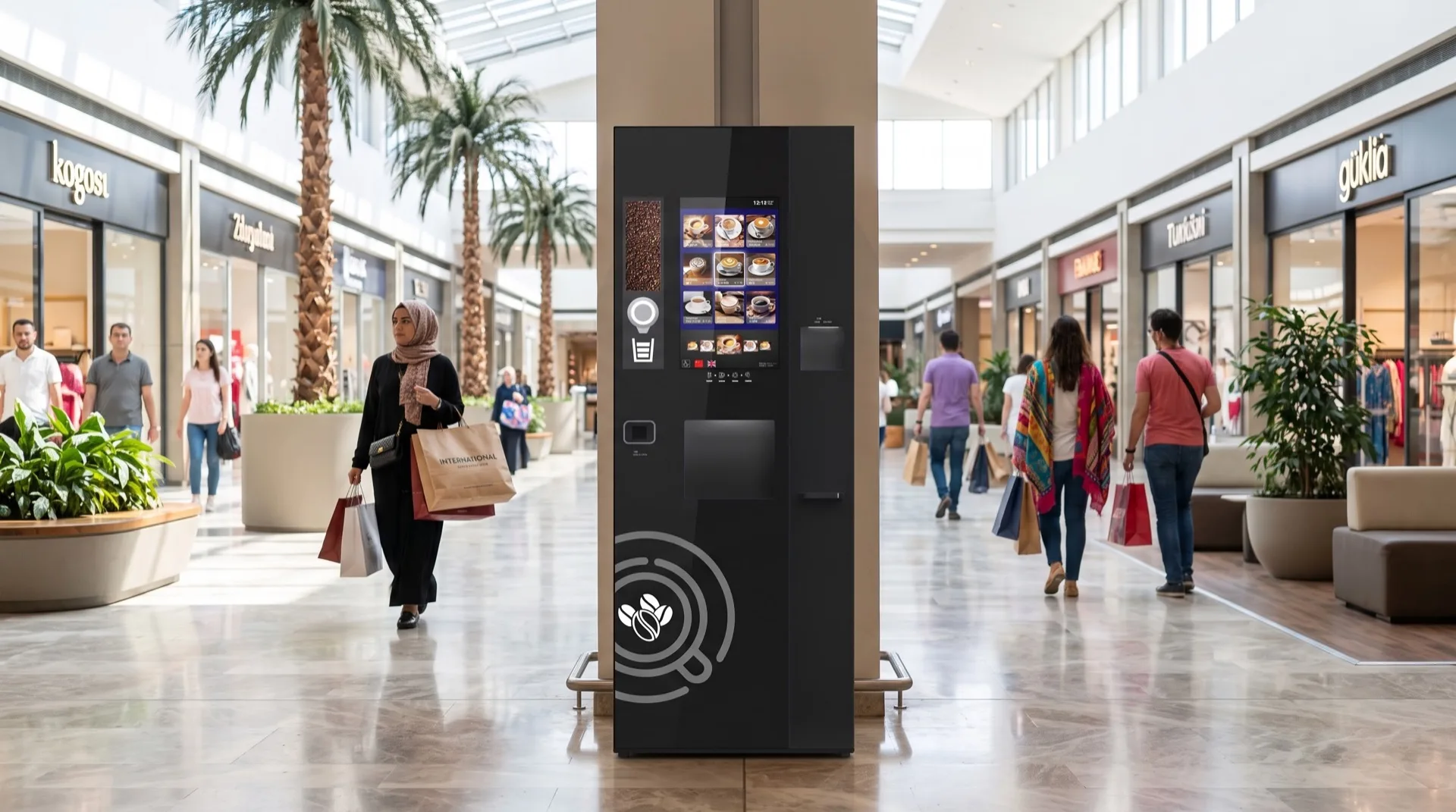
Vending machines are self service units that dispense drinks and snacks without a cashier. In Turkey the category splits into three practical groups. Coffee and tea machines grind beans or dissolve powder per cup and pour hot drinks. Snack machines hold packaged goods such as crisps, biscuits and chocolate. Combined machines do both, usually with a glass front for snacks and a separate brewing unit for drinks. CoffeeVar works only with the hot drinks side, because that is where daily repeat traffic comes from. A person who buys one coffee in the morning often buys a second in the afternoon, while a snack purchase is more occasional.
How a Vending Business Works, Step by Step
The sequence is the same whether you buy a machine or share revenue with an operator.
- Location. You need a place with steady footfall and a power point nearby: an office floor, a factory canteen, a hospital corridor, a university building, a bus terminal or a shopping centre service area. The location decides the turnover more than the machine does.
- Machine. A floor standing automatic unit with a bean grinder, a touch screen and a menu of coffee, tea and hot chocolate. It should handle several hundred cups a week without constant attention.
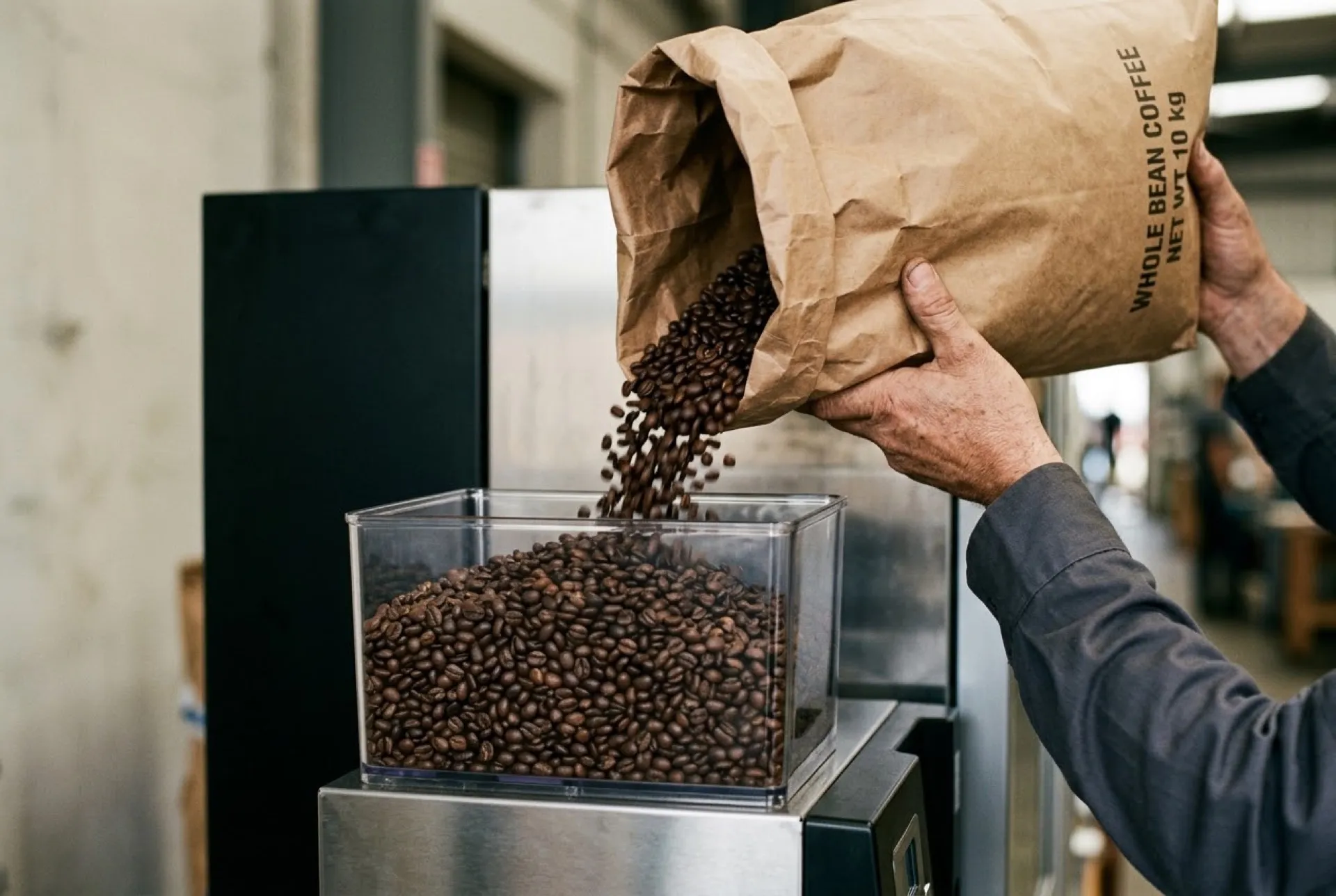
- Ingredients. Coffee beans, tea and chocolate powder, sugar, milk powder and cups. These are the running cost and the main variable in your margin.
- Service. Refilling, cleaning the brew group, descaling and fixing faults. Someone has to own this, either your staff or the operator.
- Payments. Modern machines accept coins, tokens, banknotes, bank cards and contactless, and can show a QR code for mobile payment. Card and contactless raise average spend because people stop hunting for coins.
- Telemetry. The machine reports sales and stock remotely, so you see what sold and when a refill is due instead of guessing.
The Economics of One Machine
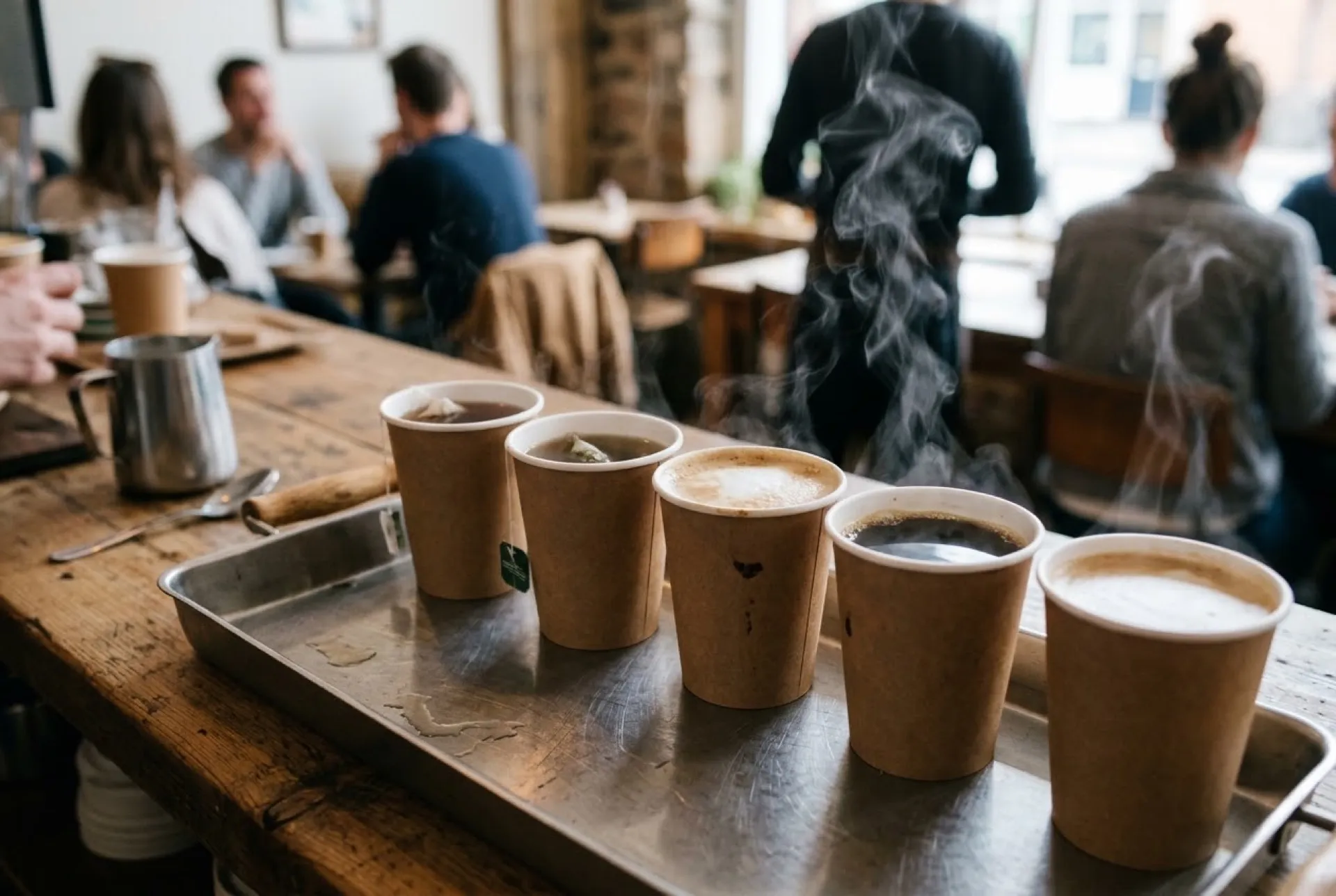
Numbers are simple once you know four of them. Ingredient cost per cup is 12–20, the sale price is 80–120, and typical traffic is 30–60 cups a day. That gives a monthly turnover of about 90,000. Payback on the equipment is 6–12. The gap between cup cost and sale price covers ingredients, cups, electricity, refilling and service, and what is left is your return. Traffic is the number that moves the result most. A site doing a few cups a day behaves very differently from a busy one, so it is worth measuring footfall before you commit.
Jetinno JL300: The Machine CoffeeVar Supplies
CoffeeVar supplies the Jetinno JL300, a floor standing fully automatic machine that grinds beans fresh for each cup and also brews tea and hot chocolate. It has a touch screen menu and takes coins, tokens, banknotes, bank cards and contactless payment, plus QR code. Telemetry and remote monitoring are built in, so sales and stock are visible online. The machine can be configured for different capacities, from small offices up to busy public sites, and a water tank version is available where there is no plumbing. It runs from a standard socket, which keeps installation simple in older buildings.
Buying or a Rental Partnership
There are two ways to start. You can buy the machine outright for 7,200 USD and keep all sales. Or you take the rental partnership: zero investment, CoffeeVar installs and operates the machine, and the location owner receives 20% of sales, roughly 18,000 per month at typical traffic, with sales visible online. The partnership suits locations that want the income without handling ingredients, refills or repairs. Buying suits operators who already run machines and want the full margin.
Which Locations Bring the Best Turnover
Hot drinks sell where people wait, work long shifts or pass through every day. Offices and factories generate repeat cups from the same people. Hospitals and clinics have staff, patients and visitors across long hours. Universities have term time peaks and quiet summers. Transport hubs and shopping centres bring volume but also competition from cafes. The table below gives realistic daily ranges rather than promises.
| Location type | Expected cups per day |
|---|---|
| Small office | 30-60 |
| Large office or factory | 60-120 |
| Hospital or clinic | 60-150 |
| University building | 50-120 |
| Transport hub or shopping centre | 100-200 |
Two things decide where you land in those ranges: how many people pass the machine on a normal day, and whether there is a cheaper or faster alternative within a short walk. A machine placed where the queue forms naturally will outperform a better machine hidden in a corridor.