
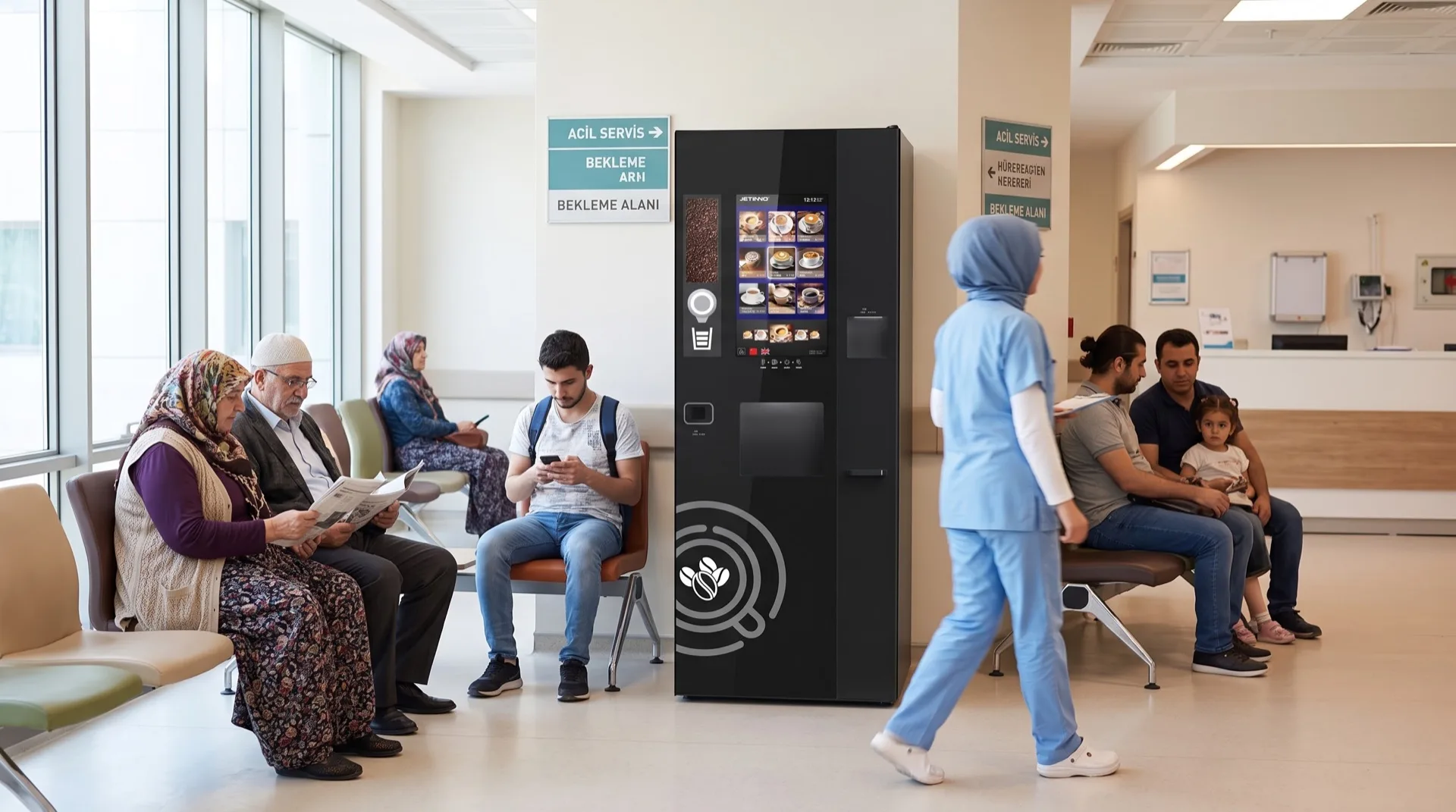
A coffee vending machine for hospital use has to work on hospital terms. Demand never stops: relatives arrive at seven in the morning, night staff need something hot at three, and the emergency waiting room fills up at any hour. Nobody wants to leave the building, find parking again or queue at a café that closes at six. A machine placed inside the hospital keeps that demand on site, and it earns while the corridors are quiet.
CoffeeVar is the exclusive distributor of Jetinno machines in Turkey. We install in hospitals, clinics and polyclinics, and we work with both purchased and rented units. The rest of this page explains where a machine belongs, which model fits which corner, and how the numbers work.
Why a Hospital Needs a Coffee Vending Machine
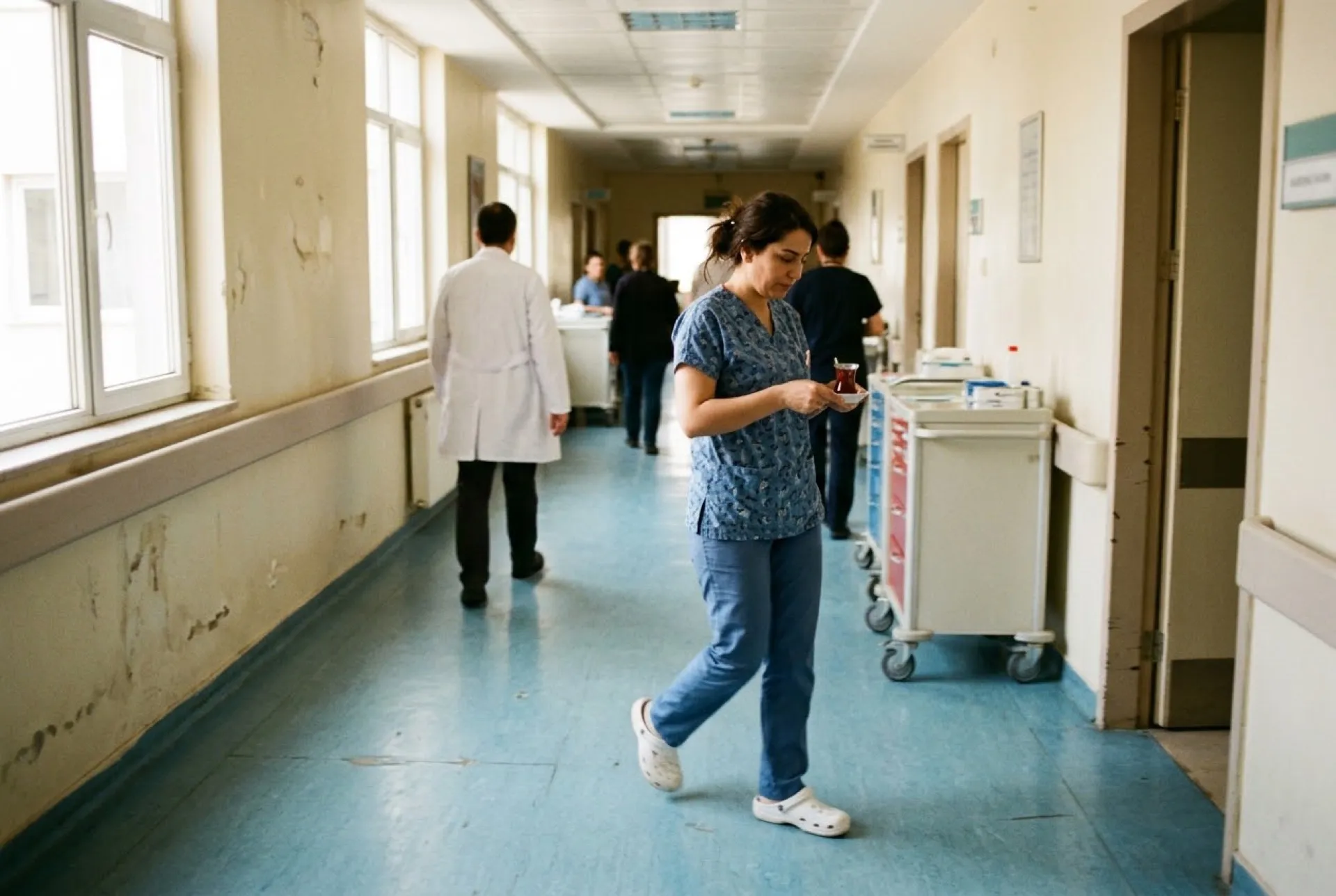
The need is constant rather than seasonal. Visitors waiting through a long operation, patients’ relatives on a second visit, ambulance crews between calls, nurses coming off a twelve hour shift. Coffee is the obvious seller, but tea matters just as much in Turkey, and hot chocolate covers the people who do not drink either. A machine that grinds beans per cup and also brews tea covers the whole building with one unit.
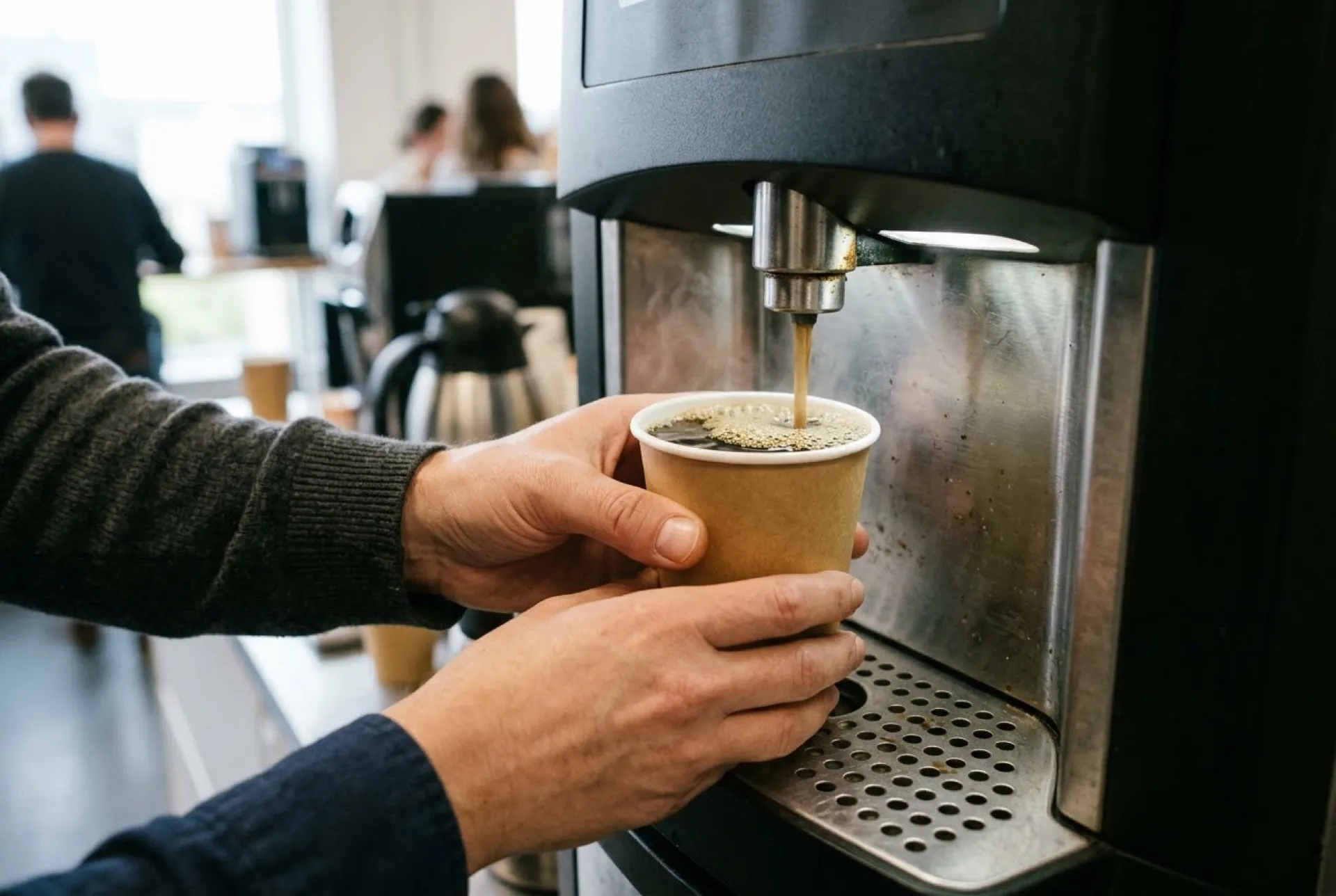
Two operational points decide whether a machine survives in a hospital. The first is hygiene. Jetinno units rinse the brewing path automatically, and the coffee is made inside the machine, cup by cup, so nobody handles the drink. The second is noise. Waiting areas and staff rooms sit next to wards and consultation rooms, so a machine that grinds and pours without a loud compressor cycle is easier to live with.
Payment matters too. Contactless bank cards and QR payments mean a visitor with no coins can still buy a coffee, and staff who buy three drinks a day do not need to carry cash. Coins and tokens remain available for anyone who prefers them.
Where to Place the Machine
- Main waiting areas. The highest footfall, and the easiest place to reach a sensible daily volume.
- Emergency departments. Open all night, with families sitting for hours and staff rotating through breaks.
- Staff rooms and rest areas. Predictable daily demand from people who know the machine is there.
- Corridors near outpatient clinics. Short, regular visits from patients arriving early for appointments.
- Laboratories and administrative floors. Smaller traffic, but steady, and often far from any cafeteria.
The practical rule is simple: put the machine where people already wait. A unit beside seating, with a socket nearby and a clear path in front of it, will outperform a machine hidden around a corner.
Which Configuration Suits a Hospital
The Jetinno JL300 is our flagship floor standing model and the usual choice for hospital entrances, large waiting areas and emergency departments. It grinds beans per cup, brews tea and hot chocolate as well as coffee, and runs a touch screen menu. The standard menu carries 8 to 12 drinks, and the recipe set can be extended up to 50. Payment options include coins, tokens, banknotes, bank cards, contactless and QR. Telemetry lets us watch stock and faults remotely, so a refill or a service visit is planned before the machine runs empty.
Capacity is configured to the location, from 40 up to 250 cups per refill. The machine runs from a standard 220V socket, and a water tank version is available where plumbing is not an option. Every unit carries a 2 year warranty.
For smaller corners, staff kitchens and satellite clinics, the compact JL26 and JL28 fit where a floor standing unit would block the corridor. They cover coffee and tea for a room sized group without taking up a waiting area. If you want to compare the range side by side, the full coffee machine catalog lists each model, and the tea and coffee vending machine page covers the dual drink setup in more detail.
Rental Partnership or Purchase
There are two ways to get a machine into the building, and hospitals use both.
Rental as a location partnership. You invest nothing. CoffeeVar installs the machine, stocks it, maintains it and handles the money side. The hospital or clinic receives 20% of sales, which comes to roughly 18,000 per month at typical traffic. The contract runs for 2 years, and sales are visible online so there is no guesswork about what the machine is taking. Cup cost is 12–20, the sale price is 80–120, and at a typical 30–60 cups a day the turnover is about 90,000. Full terms are on the sale and rental page.
Purchase. The JL300 costs 7,200 USD. You own the machine, keep the full margin on every cup and decide the menu and pricing yourself. Payback at typical traffic works out to about 6–12. Current figures are listed on the coffee machine prices page, and you can model your own footfall with the vending machine calculator.
Who Does What
| CoffeeVar | The location |
|---|---|
| Delivery, installation and setup | A suitable spot with a socket |
| Refilling, cleaning and technical service | Everyday tidiness around the machine |
| Payment system and telemetry monitoring | Passing on fault reports |
| Payout of the location share in a rental | A contact person for coordination |
Installation and Service
Delivery and installation across Turkey happen within about 72 hours after the contract is signed, and our service engineers are based in the main cities. In a hospital, that speed matters: a machine that stands broken for a week stops being used. Telemetry shows us stock levels and error codes before anyone calls, and consumables arrive on a schedule rather than on request.
For a purchased machine, the 2 year warranty covers the unit, and service calls are handled by our own engineers. For a rental, maintenance sits with us by definition. Either way, the hospital is not left managing a coffee operation.