
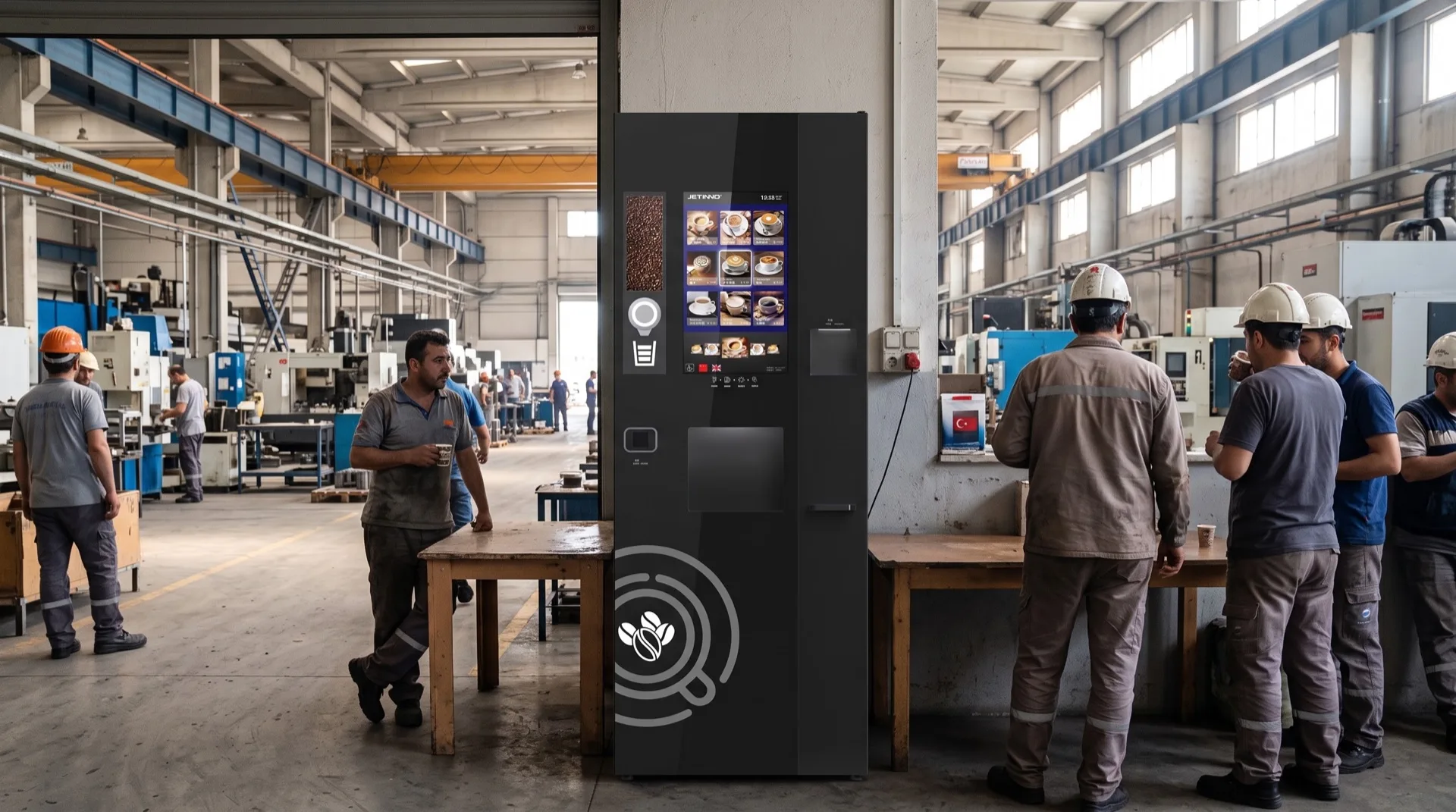
Why a Factory Needs Its Own Coffee Vending Machine
A coffee vending machine for a factory or workplace solves a problem that is easy to underestimate: hundreds of employees, three shifts, and a canteen that is closed exactly when people need it most. At 06:00 the night shift is finishing. At 14:00 the day shift is dragging. Between those moments there are short breaks of ten or fifteen minutes, and nobody is going to leave the site to find a decent cup. When drinks are available inside the building, the break stays inside the building, and the shift change stops being a small daily loss of time.
The demand profile in an industrial setting is different from an office. Volume is high and concentrated around shift changes, tea matters as much as coffee, and the machine has to survive an environment with dust, vibration and constant use. A unit that brews tea and coffee from the same cabinet, with a menu people understand in five seconds, works far better here than a premium coffee-only setup.
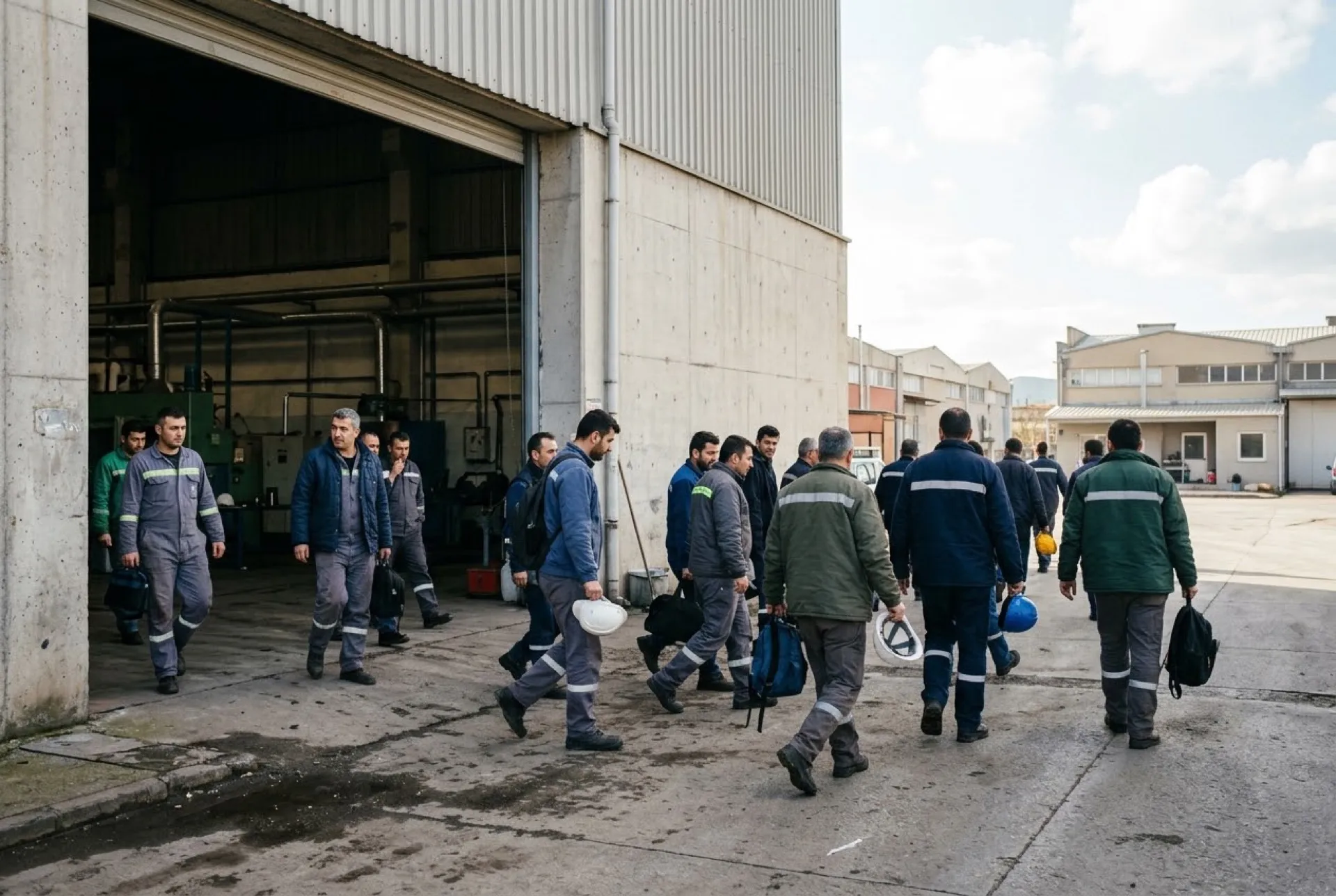
Where to Place a Coffee Vending Machine in a Factory
Placement decides whether the machine is used or ignored. The best spots are usually:
- Break rooms next to the main production hall, where people already gather.
- Near the time-clock or entrance, so a cup fits naturally into the shift change routine.
- Between two departments on a corridor that both shifts pass through.
- A second unit in the warehouse or loading area if walking to the main break room takes more than three or four minutes.
Give the machine a solid, level surface, a nearby 220V socket, and enough space in front for a queue of five or six people. In dusty areas, a spot slightly away from cutting, grinding or sanding stations keeps the cabinet cleaner and reduces cleaning frequency.
Which Configuration Suits a Factory
Capacity is the first decision. A configuration with a capacity of 250 cups per refill covers a busy hall without daily attention, while smaller cabinets suit a workshop corner or an office block on the same site. If tea demand is strong, choose a unit that brews tea and hot chocolate alongside coffee, not a coffee-only model. You can compare options in the tea and coffee vending machine range.
The JL300 is the main model for large sites: floor-standing, grinding beans per cup, with tea and hot chocolate available on the same menu. For small corners, staff canteens, or a second location on a big campus, the compact JL26 and JL28 fit where floor space is tight.
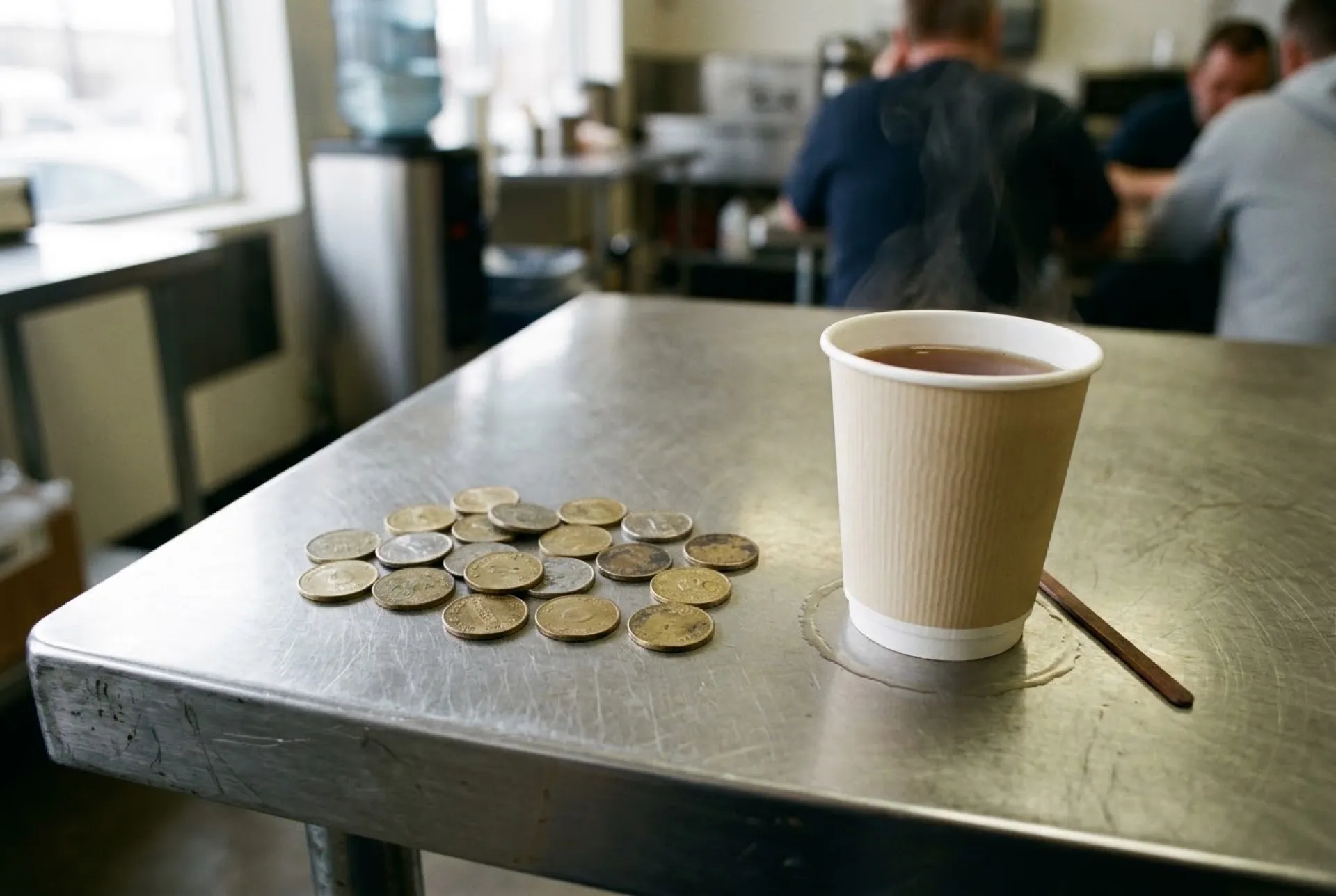
Payment is where factory sites differ most. Many employers subsidise part of the price and hand out tokens, so a coin and token operated setup keeps the accounting simple and removes the need for cash handling at the machine. Banknotes, bank cards, contactless and QR payments can be added for employees who prefer to pay directly. See the coin operated tea coffee vending machine page for that configuration, and the wider vending machines section for other layouts.
Two Ways to Get a Machine: Rental or Purchase
Rental as a location partnership. Zero investment from the factory. CoffeeVar installs and operates the machine, and the location receives 20% of sales, which at typical traffic is around 18,000 per month. With a cup cost of 12–20 and a sale price of 80–120, a site running about 30–60 cups a day generates turnover of roughly 90,000. Sales are visible online, so there are no arguments about numbers. Details are on the sale and rental page.
Purchase. The JL300 costs 7,200 USD. The factory owns the machine, keeps the full margin on every cup, and decides the internal price. Payback at typical traffic is around 6–12. Current figures are listed under coffee machine prices, and you can model your own numbers with the calculator.
Who Does What
| What CoffeeVar does | What the location does |
|---|---|
| Supplies, installs and configures the machine | Provides a level spot, a 220V socket and access |
| Sets up payment, including tokens if used | Distributes tokens or agrees the internal price |
| Plans refills around shift patterns | Keeps a key contact for refill visits |
| Handles service and technical support | Reports faults and keeps the area reasonably clean |
Installation, Refilling and Service
Once the contract is signed, the machine is delivered and installed, and the refill schedule is set to match your shifts rather than a generic route. A 250-cup configuration means fewer visits and fewer interruptions. Service engineers in the main cities handle technical issues, and the machine is monitored so problems are usually known before the shift complains about them. Full technical details are in the coffee machines catalog.