
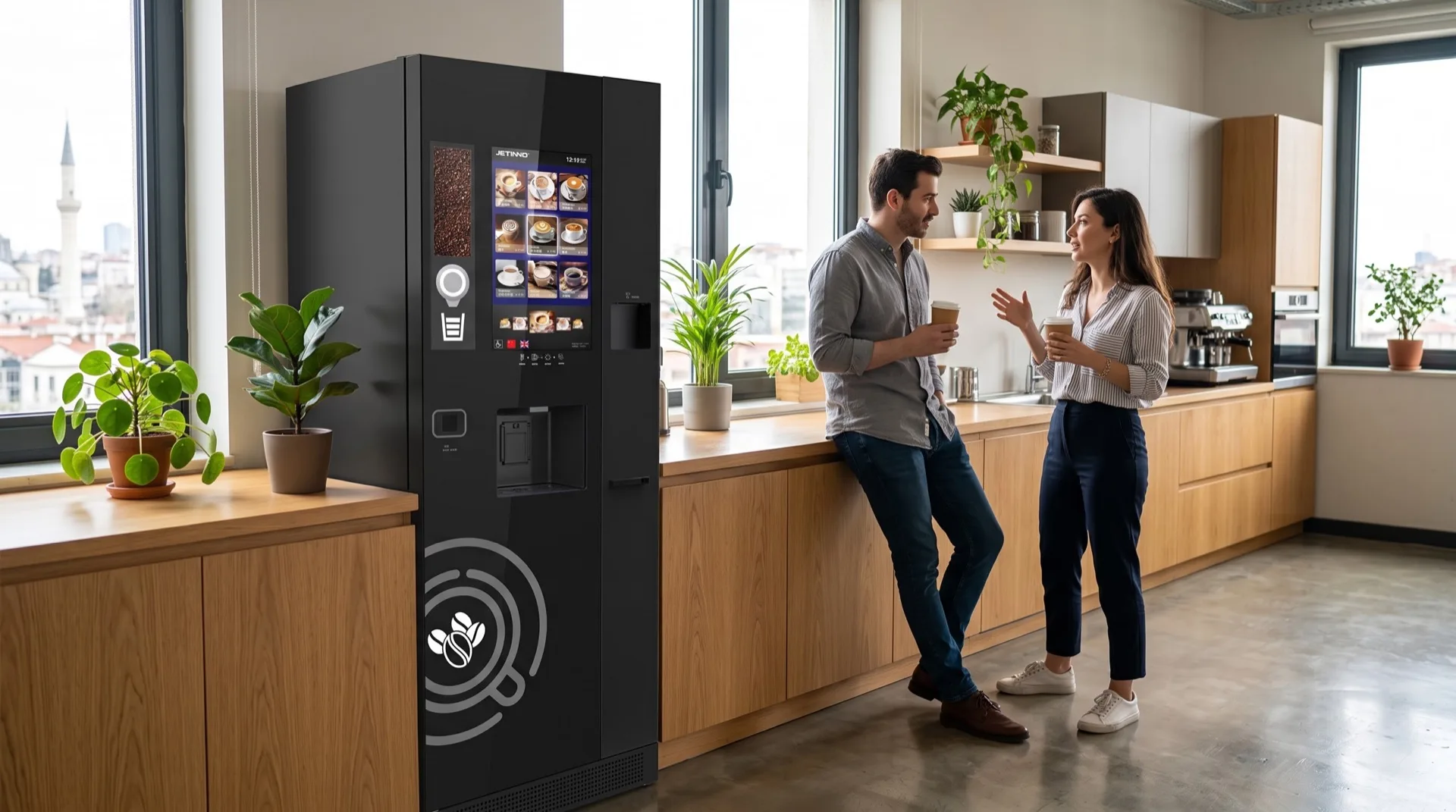
An office tea and coffee machine is a self-service unit installed so staff can get a hot drink quickly during the working day. It differs from a retail point in one way: the goal here is not revenue but removing the time lost in the kitchen and the queue at the kettle. This page covers what is specific to an office installation — capacity, payment setup, noise, water supply and cost.
What a Machine Solves in an Office
An average employee spends 15–20 minutes a day walking to the kitchen and waiting for tea or coffee. In a thirty-person office that adds up to roughly ten working hours a day across the team. A machine brings that down to under a minute per drink and removes the queue.
The second benefit gets less attention: consistency. The pot is never left empty, the tea never runs out, the milk never spoils. The machine follows the same recipe every time.

Capacity by Office Size
| Headcount | Daily consumption | Suitable capacity |
|---|---|---|
| 10–15 people | 20–30 cups | 40 cups |
| 15–30 people | 30–50 cups | 60 cups |
| 30–60 people | 60–90 cups | 80–120 cups |
| 60+ or multi-floor | 100+ cups | 120–250 cups, or a second machine per floor |
The rough rule is two drinks per person per day. When choosing, it makes sense to keep capacity slightly above consumption — that brings refilling down to once or twice a week.
Paid or Free?
Three setups are used in offices, and all three can run on the same machine:
- Free-vend mode — drinks are covered by the company, no payment taken. The most common office setup;
- Token mode — staff receive monthly tokens, guests are counted separately. Keeps consumption under control;
- Card payment — the employee pays. Preferred in shared business centres.
Even in free-vend mode the online panel shows how many drinks were dispensed, so the cost stays visible.
Noise, Water and Placement
- Noise. Sound occurs only while grinding and lasts a few seconds. In an open-plan office it is enough to place the machine in the kitchen or a corridor alcove rather than beside the desks;
- Water. It can be plumbed in or run from an internal tank. The tank option makes installation possible on floors where no pipework can be run;
- Power. A standard socket is enough, no dedicated line required. Standby consumption is low.
Who Refills and Cleans It
The daily task takes a few minutes: top up ingredients, empty the waste container, wipe the exterior. The milk line is cleaned every day by an automatic washing programme — no dismantling required.
There are two options: office management handles it (no technical background needed, we train on delivery), or we take on refilling and maintenance under a service package.
Cost
The purchase price is 7,200 USD + VAT, including delivery, installation, training and the online panel. For companies that prefer not to invest, the location partnership model starts at 0 ₺.
| Item | Value |
|---|---|
| Ingredient cost per cup | 12–20 ₺ |
| 30-person office, 2 drinks each | ~60 cups a day |
| Approximate monthly ingredient cost | 60 × 22 working days × 12–20 ₺ |
| Electricity | A few lira per day |
Detailed calculations are on the coffee machine prices page. For rental terms see tea and coffee machine rental.
Cups, coffee beans, milk powder and other consumables are listed on the coffee and consumables page. How quickly the machine pays for itself is worked out step by step in the article is buying a coffee vending machine profitable.