
What a Coin Operated Coffee Vending Machine Is
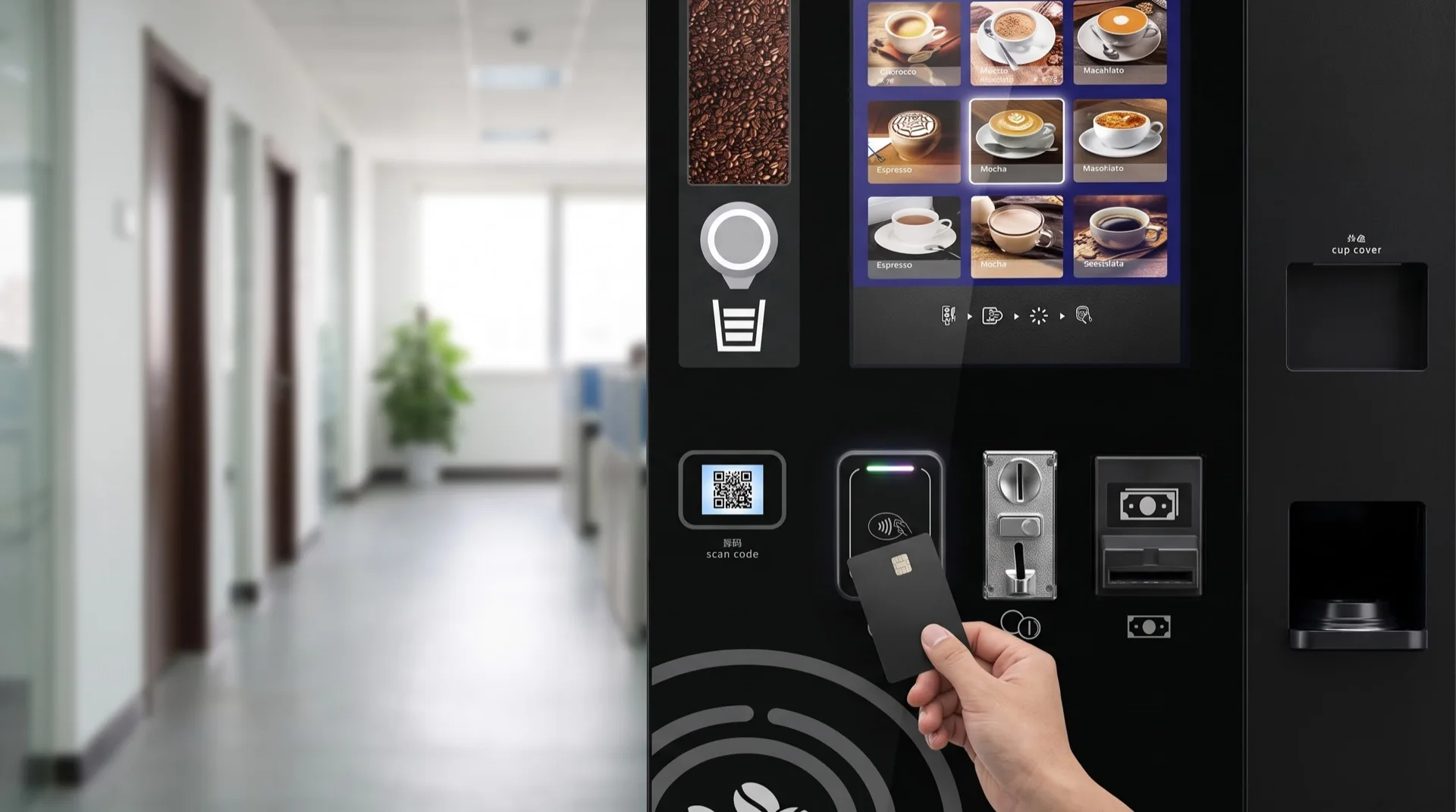
A coin operated coffee vending machine is a self service unit that brews drinks on demand and accepts payment without a cashier. The payment module is the part that decides how people pay, and it can be configured in several ways. The most common setup accepts coins, tokens, banknotes, bank cards and contactless cards, and QR codes. On the Jetinno JL300, the machine grinds beans fresh for each cup and also brews tea and hot chocolate, so the menu covers more than coffee. The touch screen shows 8 to 12 drinks, and the customer selects, pays and collects in under a minute.
Payment modules differ in more than hardware. A coin acceptor needs a coin return and a way to empty the cash box. A token reader works like a coin acceptor but only recognises the token you issue, which keeps out foreign coins. A banknote validator widens the price range you can charge. A card and contactless reader moves the transaction to the bank, so there is less cash on site. A QR reader does the same through a mobile wallet. You can combine modules on one machine, which is useful when a site has both cash users and card users.
How a Coin Operated Coffee Vending Machine Takes Payment
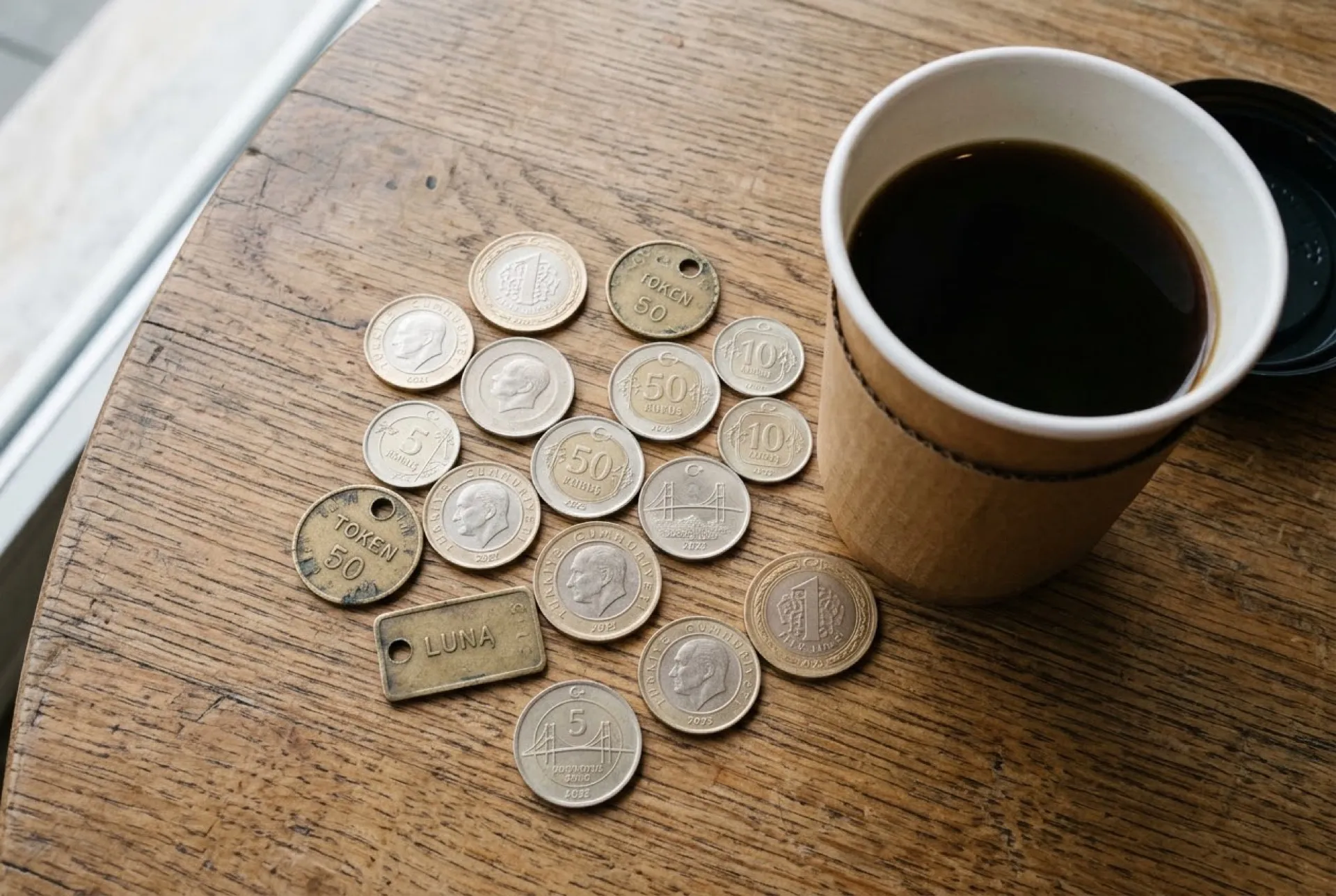
The payment path is simple. The customer picks a drink, the screen shows the price, and the machine waits for the amount. Coins and tokens drop into the acceptor, banknotes into the validator, and card or QR payments go through the reader. When the amount is met, the brewer starts. Change is returned from the coin tubes or the note recycler where fitted. If the customer walks away before paying, the selection clears and the machine returns to idle.
For the operator, the important part is that every payment is logged against a drink. The machine does not just hold cash, it records what was sold, at what price and at what time. That record is the base for reporting and for the rental share.
When Tokens Make Sense and When Cards Do
Tokens work well in closed sites where the same people use the machine every day and the employer wants to subsidise drinks. Factories, dormitories, staff canteens and gated compounds are typical. The employer buys tokens in bulk and hands them out, or sells them at a discount, so the worker pays less than the counter price. Tokens also remove the risk of foreign coins and make the cash box easier to reconcile.
Cards and QR suit open sites with passing traffic, offices with a mixed workforce, and locations where people rarely carry coins. A university campus, a hospital corridor or a transport hub will see more card and phone payments than cash. In practice, most sites run a mixed configuration: coins and tokens for regulars, cards and QR for everyone else. The machine handles all of them on one screen.
Counting Sales, Reporting and Remote Monitoring
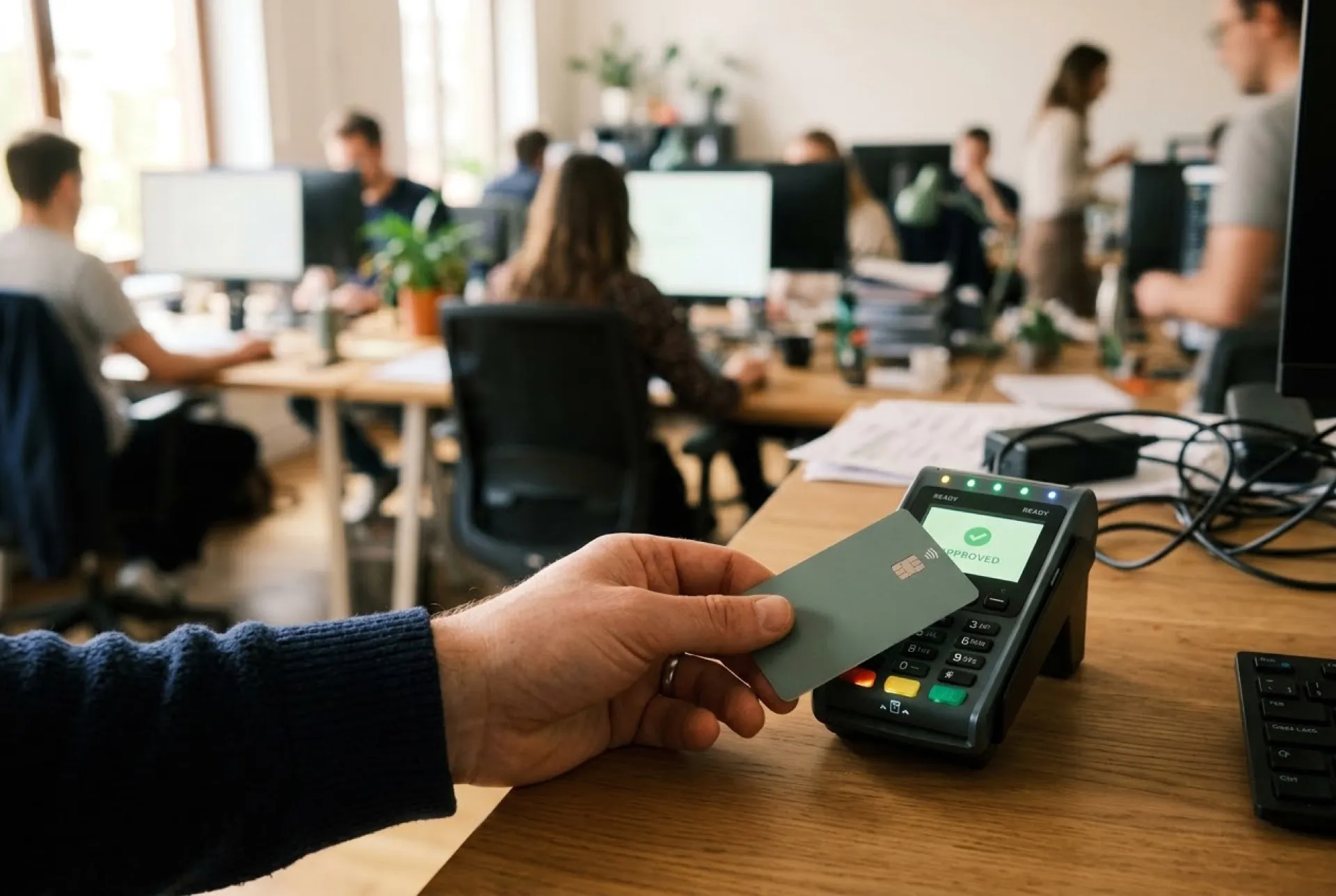
The machine counts every sale at the moment of payment and stores it. Telemetry sends that data to a remote dashboard, so you can see cups sold, drinks by type, cash collected and any error code without visiting the site. For a rental partnership, this matters because the location owner can see sales online and check the share figure directly. There is no need to wait for a monthly printout or to trust a handwritten tally.
Remote monitoring also flags low stock and faults. If a canister or a coin tube runs low, the operator knows before the next customer is turned away. That keeps uptime high and reduces the number of service trips.
Hygiene, Refilling and Daily Operation
Because the machine grinds beans per cup, the coffee is fresh and there is no standing brew. The brewer and the waste container need a daily check, and the milk and powder canisters are refilled as they empty. A standard routine covers wiping the touch screen, emptying the waste, checking the water and cleaning the brewer. Most operators build this into a short morning visit.
Refilling capacity depends on the configuration. The Jetinno JL300 can be set from 40 to 250 cups per refill, so a small office and a busy factory can use the same model with different canister and tank sizes. The machine runs on a 220V socket, and a water tank version is available where there is no plumbing. That makes installation possible in older buildings and temporary sites.
Models, Price and the Rental Partnership
There are two ways to start. You can buy the machine outright for 7,200 USD. Or you can take the rental partnership, where the investment is zero: CoffeeVar installs and operates the machine, and the location owner receives 20% of sales, about 18,000 per month at typical traffic. The contract runs for 2 years and sales are visible online.
The unit economics are straightforward. Cup cost is 12–20 and the sale price is 80–120. At a typical 30–60 cups a day, monthly turnover is about 90,000, and payback is 6–12. The rental route suits locations that want the income without buying equipment, while the purchase route suits operators who want the full margin.
Comparing Payment Options
| Payment option | Who it suits | Pros | Cons |
|---|---|---|---|
| Coins | Open sites, canteens, small offices | No bank setup, instant payment | Needs coin tubes and change; foreign coins can jam |
| Tokens | Factories, dormitories, closed sites with employer subsidy | Controlled pricing, easy reconciliation, no foreign coins | Only works where tokens are issued and sold |
| Banknotes | Sites with higher drink prices | Accepts larger amounts, fewer coins needed | Validator needs maintenance; change may be limited |
| Bank card and contactless | Offices, hospitals, campuses, transport hubs | Less cash on site, familiar to most users | Needs a card terminal and settlement |
| QR code | Mobile first locations, younger crowds | No card needed, fast checkout | Depends on phone signal and wallet adoption |