
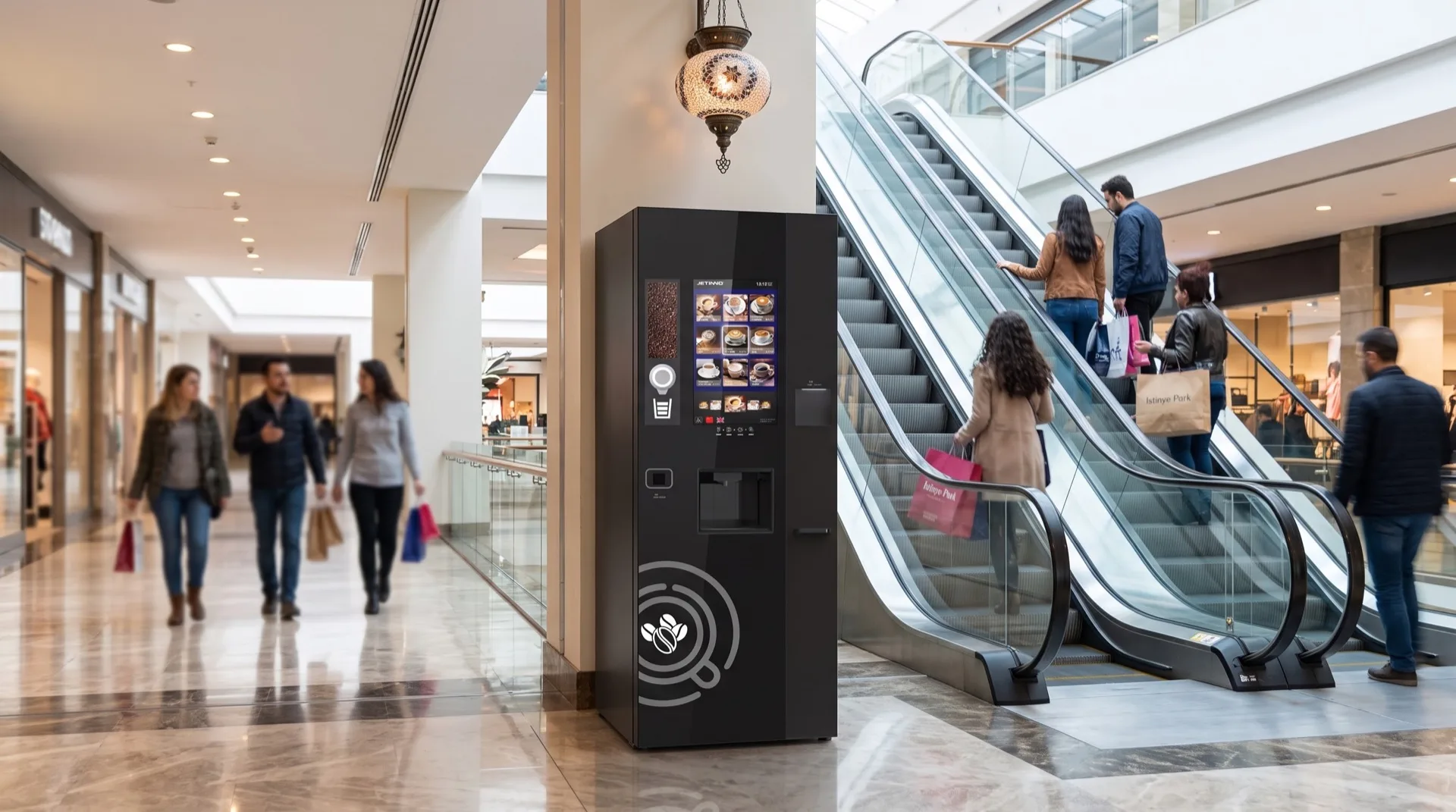
A coffee vending machine for shopping mall locations works differently from one in an office or a factory. Here the audience changes every hour: morning shoppers, lunchtime staff, afternoon families, evening cinema crowds. Nobody plans a coffee break in advance, they decide in the ten seconds they spend walking past. That is exactly the kind of demand a well placed automatic machine can capture, and it is why malls across Turkey are adding self service coffee points in corridors and near food courts.
Why a shopping mall is a strong location for a coffee vending machine
The main asset of any mall is footfall, and footfall is what a vending point converts. A visitor who has been walking for two hours, carrying bags, waiting for a friend or killing time before a film starts is a natural coffee buyer. The same person will rarely queue at a cafe for eight minutes, but will happily tap a card at a machine that delivers in under a minute.
Weekend peaks matter most. Saturday and Sunday traffic can be two to three times the weekday level, and the machine simply earns more without any extra staffing. Mall staff are a second, quieter revenue stream: security, cleaning, retail employees and kiosk workers buy coffee every working day, before the shops even fill up. Late evening, when most cafes start closing, the machine keeps serving people leaving the cinema.
Payment behaviour is the other reason this works. Mall visitors expect to pay by bank card or phone. A machine with card and contactless readers plus QR payment removes the friction of finding coins, and coin and banknote acceptance still covers everyone else. The point can also carry the mall’s own branding on the screen and body, so it looks like part of the building rather than a random box in the corridor.
Where exactly to place the machine
Placement decides the result more than any technical feature. The best spots in a shopping mall are:
- Corridors on the main walking route, ideally where people slow down, near escalators, lifts or a seating island.
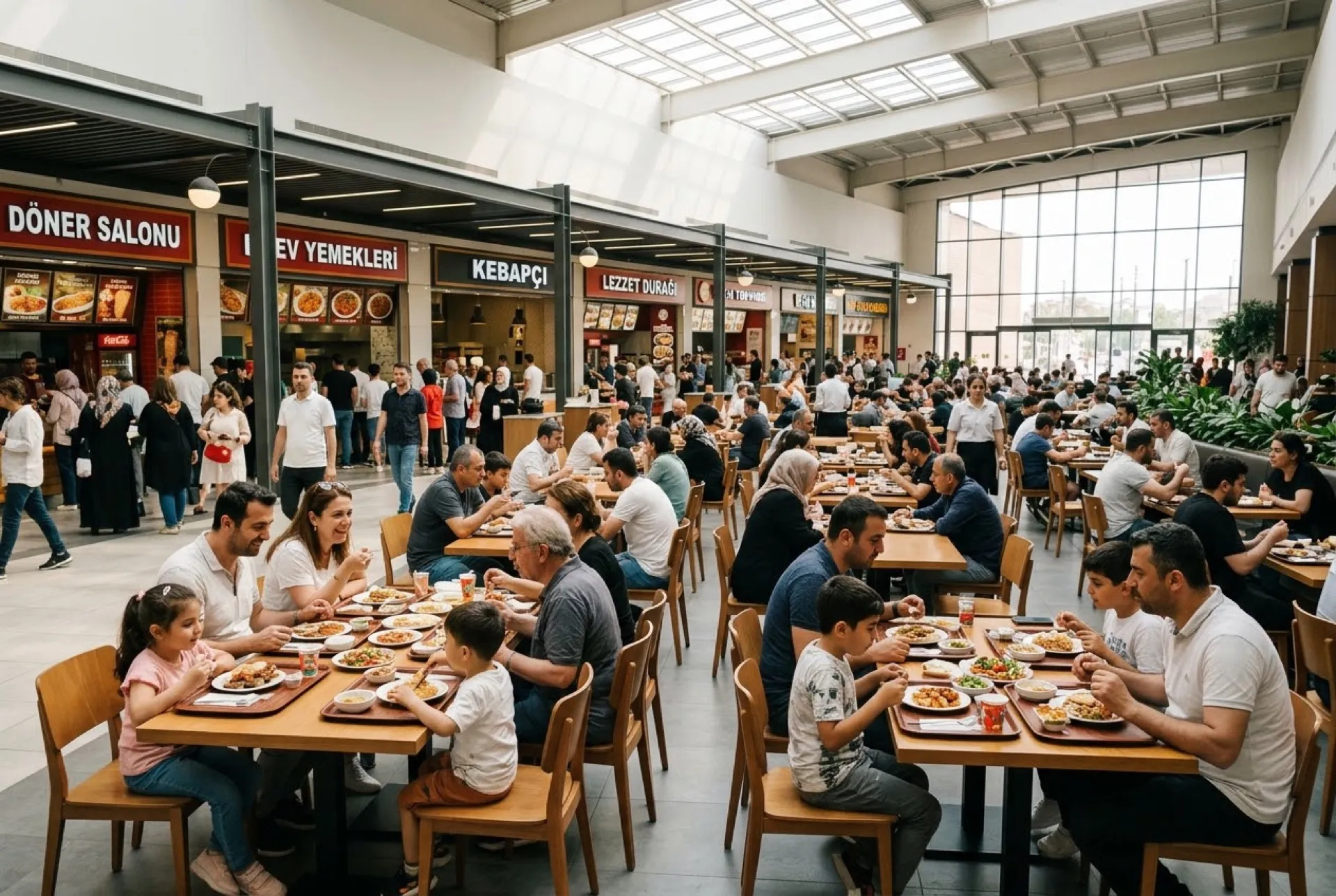
- The edge of the food court, where guests finish a meal and look for coffee, but not inside the seating area where tables are already busy.
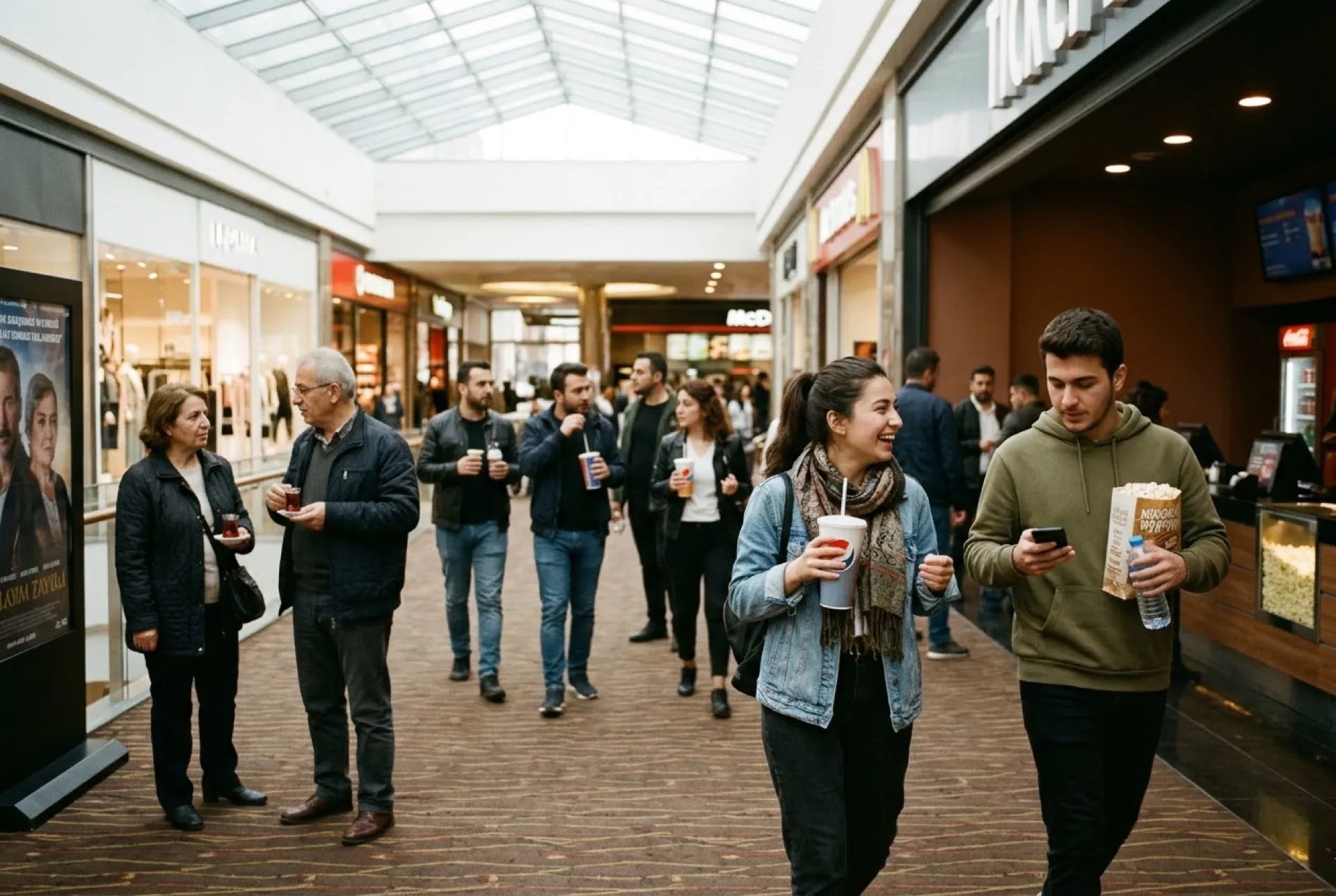
- Cinema floors and the area around ticket counters, where waiting is part of the experience.
- Near entrances used by staff, which guarantees early morning and late evening sales.
- Toilet and service corridors, which have steady, predictable traffic all day.
A machine needs a 220V socket and a clear metre of space in front of it. If no water line is available, a water tank version solves the problem, and refilling is handled during the service visit.
Which configuration suits a mall
For a busy corridor or a food court edge, the Jetinno JL300 is the flagship choice. It is a floor standing fully automatic machine that grinds beans fresh for every cup and also brews tea and hot chocolate, which matters in Turkey where not every visitor wants coffee. The touch screen carries 8 to 12 drinks on the standard menu, with up to 50 recipes possible, so you can add a strong Turkish coffee style option or a children’s hot chocolate. Payment covers coins, tokens, banknotes, bank cards, contactless and QR. Telemetry shows sales and stock remotely, so refills are planned instead of guessed. Capacity can be configured from 40 up to 250 cups per refill, and the machine is backed by a 2 year warranty.
For smaller corners, a secondary corridor or a low traffic floor, compact models such as the JL26 and JL28 fit where a full size unit would be in the way. You can see the whole range in the coffee machine catalog, and if tea matters as much as coffee, the tea and coffee vending machine page explains the options.
Two ways to get a coffee vending machine for your mall
The first is a rental partnership, where the mall provides only the location. CoffeeVar installs and operates the machine, covers maintenance and refills, and the location receives 20% of sales, roughly 18,000 per month at typical traffic. There is no investment on the mall side, the contract runs for 2 years, and sales are visible online at any time. With a cup cost of 12–20 and a sale price of 80–120, a typical point sells around 30–60 cups a day, which is about 90,000 turnover and a payback of 6–12 for the operator. You can read the details on the sale and rental page or estimate your own numbers with the calculator.
The second is direct purchase, where the mall or an investor buys the machine and keeps all revenue. The JL300 costs 7,200 USD. Current figures are listed on the price page. Purchase suits malls that already run their own service operations and want full control of the menu and branding.
What CoffeeVar does and what the location does
| CoffeeVar | The location |
|---|---|
| Delivery and installation, in Turkey usually within about 72 hours after contract | Provides the spot, a 220V socket and access for refilling |
| Machine, setup, menu and recipe configuration | Keeps the area clean and unobstructed |
| Refills, ingredients, technical service and repairs | Shares sales data or provides access for monitoring |
| Remote monitoring and reporting | Points visitors to the machine when asked |
Installation, service and daily operation
Installation is handled by CoffeeVar. The machine is levelled, connected, filled, tested and set up with your chosen drinks and prices, and staff are shown how the basics work. Service engineers are based in the main cities, and remote telemetry flags low stock or a fault before it becomes an empty machine on a Saturday afternoon. Cleaning and refilling take minutes, and in the rental model our team handles it.