
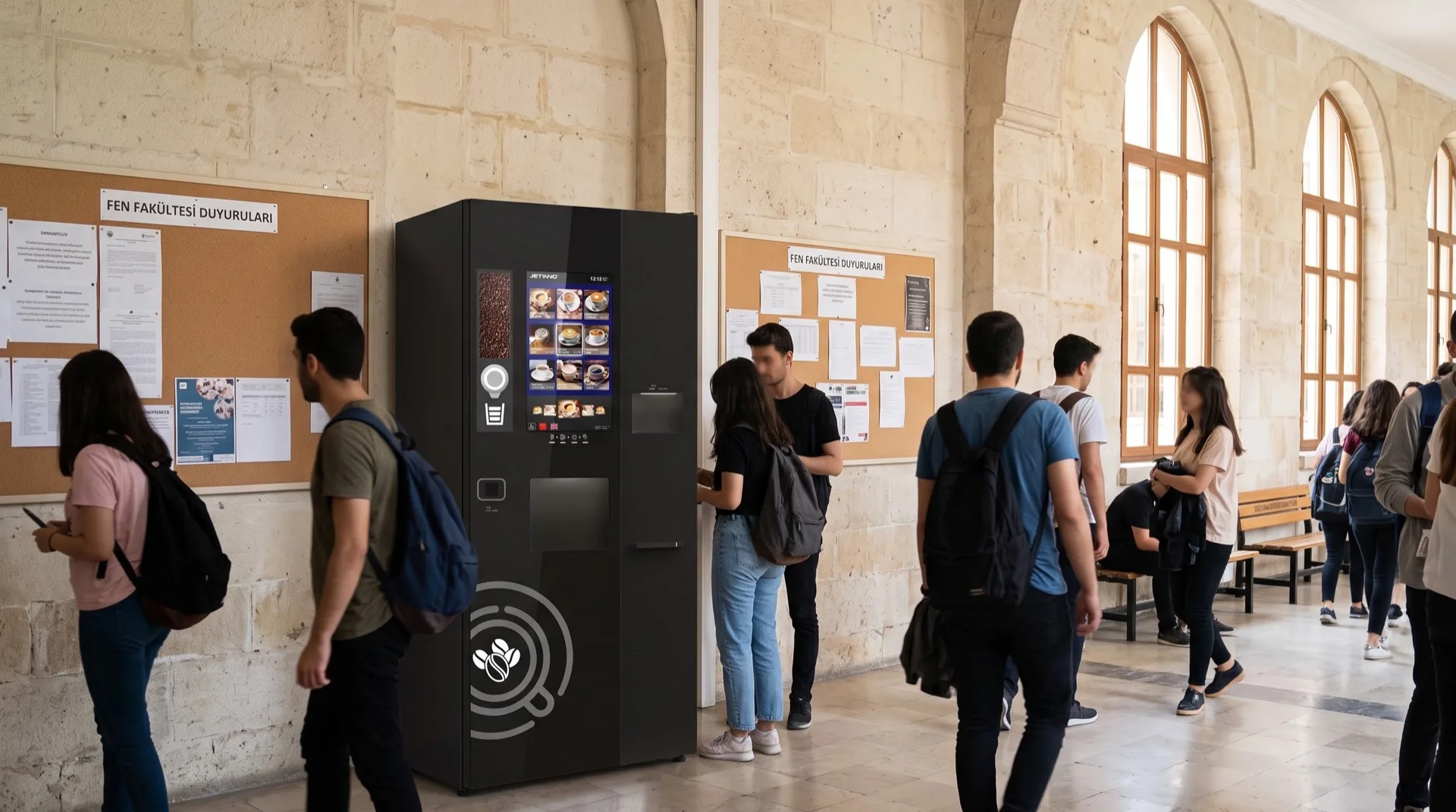
A coffee vending machine for university campus life solves a very specific problem: students and staff want a hot drink quickly, between lectures, without leaving the building or standing in a queue at a cafe. Campuses are one of the strongest locations for automatic coffee because demand is predictable, repeated daily, and concentrated in short windows. The bell rings, the corridor fills for ten minutes, and a machine that grinds beans per cup and pours tea as well keeps that flow moving.
Why a Campus Needs a Coffee Vending Machine
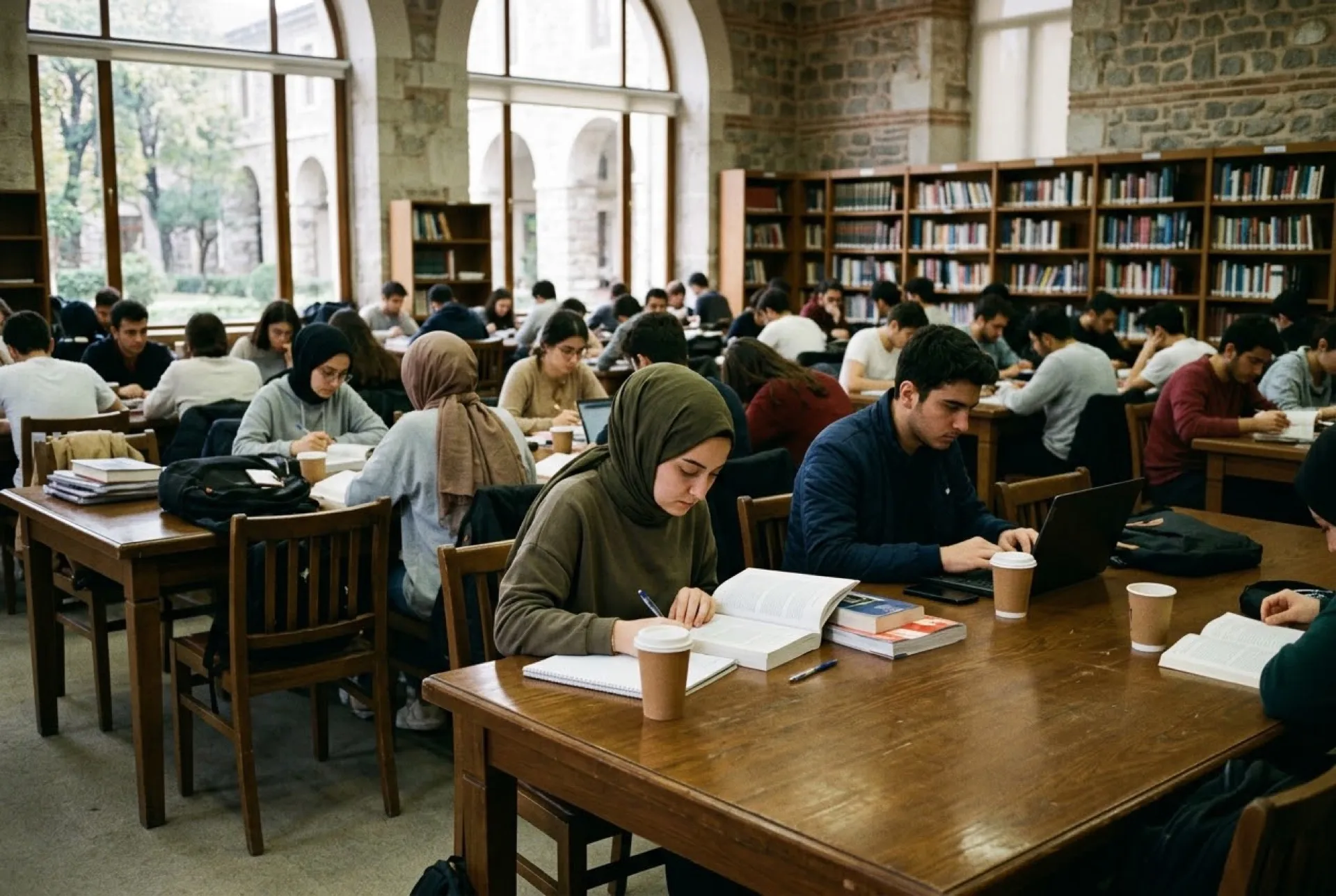
University traffic is not like an office. It arrives in waves. Between lectures, during exam weeks, in the evening when the library fills up, people want a fast cup at a fair price. Students are price sensitive, so a low price per cup matters more than a fancy menu. At the same time, tea demand on campus is real and often underestimated. Many students and staff drink tea several times a day, and a machine that brews both tea and coffee covers two habits with one unit.
Staff use is steadier. Lecturers, administrative teams and security personnel drink coffee through the day, including outside peak hours. That mix smooths the sales curve: students create the peaks, staff fill the quiet hours.
Where to Place a Coffee Vending Machine on Campus
Placement decides how much a machine earns. The best spots share three things: foot traffic, waiting time, and a power socket nearby.
- Faculty corridors near lecture halls, where students pass between classes.
- Library entrances and reading floors, especially during exam periods.
- Dormitory lobbies, where demand continues into the evening and night.
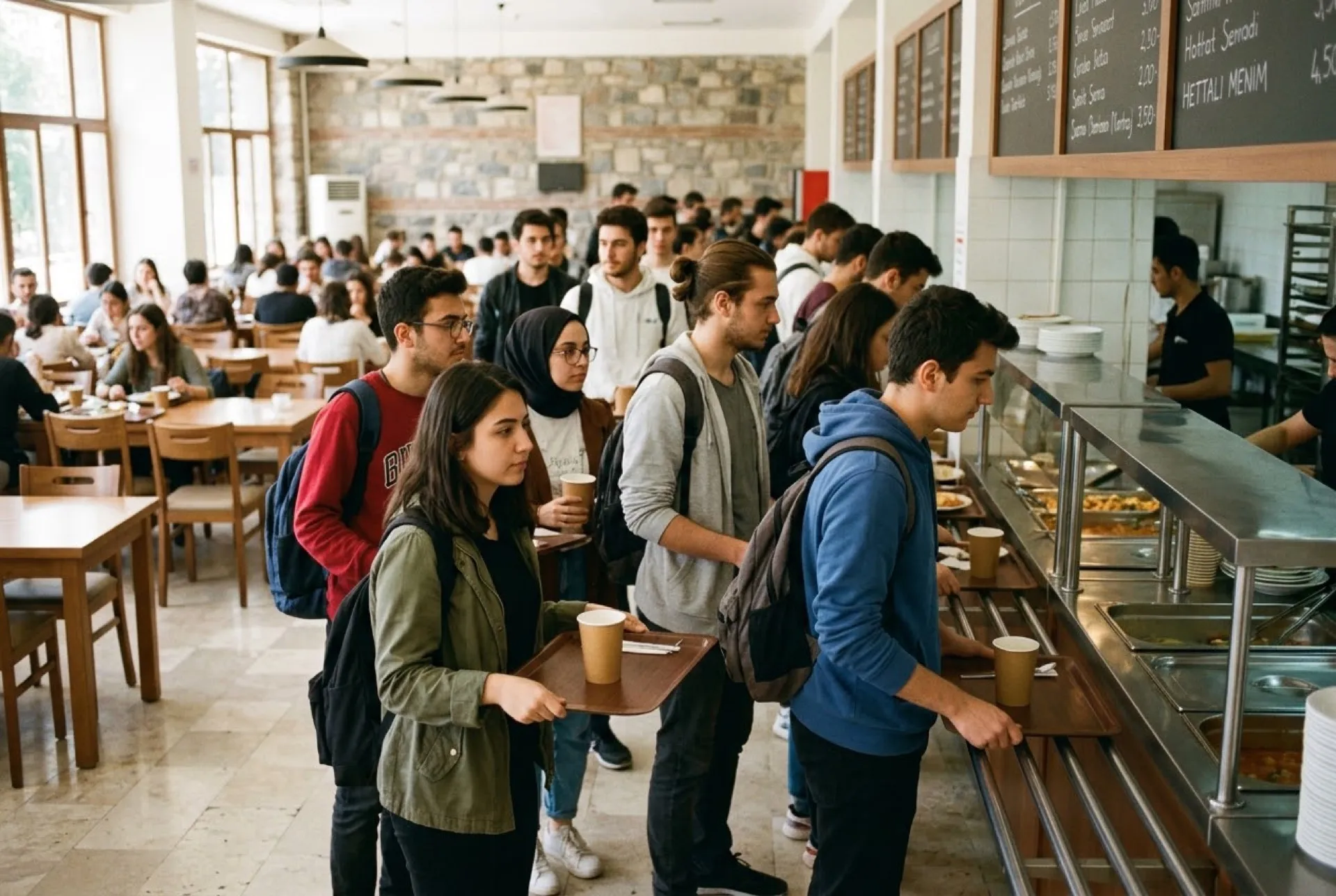
- Canteen and cafeteria exits, catching people after meals.
- Administrative buildings, for staff who rarely leave their floor.
A corner near a seating area works better than a dead-end corridor. If the spot is tight, a compact model fits where a floor-standing unit cannot. You can compare formats in the coffee machine catalog.
Which Configuration Suits a University
Capacity is the first decision. For a busy faculty corridor or a main library, plan for 120 to 250 cups per refill so the machine does not run empty during peak days. Smaller corners, a staff room or a minor faculty entrance, can run on lower capacity.
The Jetinno JL300 is our main model for campus use. It grinds beans per cup and also brews tea and hot chocolate, which matches the mixed demand of students and staff. Payment is flexible: coins, tokens, banknotes, bank card, contactless and QR. For universities, token and student card scenarios are common, and card or contactless payment lets everyone else buy without cash. If you want a machine built around tea as much as coffee, see the tea and coffee vending machine options.
For small corners, compact models such as the JL26 and JL28 fit into narrow spaces while still covering coffee and tea. In buildings where cash is inconvenient, a coin operated tea and coffee vending machine can be configured with tokens instead.
Two Ways to Get a Machine on Campus
You can buy the machine outright. The JL300 costs 7,200, and the unit becomes university property. This suits campuses that want full control of pricing and menu, and that can handle refilling and first-line care themselves or through a service contract.
The second route is a rental partnership, and it is the one most universities choose. There is no investment: CoffeeVar installs and operates the machine, and the location receives 20% of sales. At typical campus traffic this comes to about 18,000 per month. The contract runs for two years, and sales are visible online, so the faculty or dormitory administration can see exactly what the machine is doing.
The unit economics are simple. Cup cost is 12–20, the sale price is 80–120, and a typical location sells around 30–60 cups a day. That gives turnover of about 90,000, with payback of 6–12 on a purchase. You can model your own numbers with the vending machine calculator, or read more about sale and rental terms.
What CoffeeVar Does and What the Location Does
| CoffeeVar | The location |
|---|---|
| Delivery and installation | Provides a power socket and a suitable spot |
| Machine setup, menu and payment configuration | Agrees the drink prices and payment type |
| Refilling, cleaning schedule and technical service | Keeps the area around the machine tidy |
| Remote monitoring of sales and stock | Checks the online sales report if needed |
| Staff training on basic daily checks | Reports faults through a single contact |
Installation and Service
Installation is quick once the spot and the power socket are ready. CoffeeVar handles delivery, setup and staff briefing, and the machine runs on a standard socket. Service is handled by our team, and because the machine reports its status remotely, refills are planned before the machine empties. For a campus, this matters: a machine that runs out at 11:00 on a Tuesday loses the whole day’s peak.