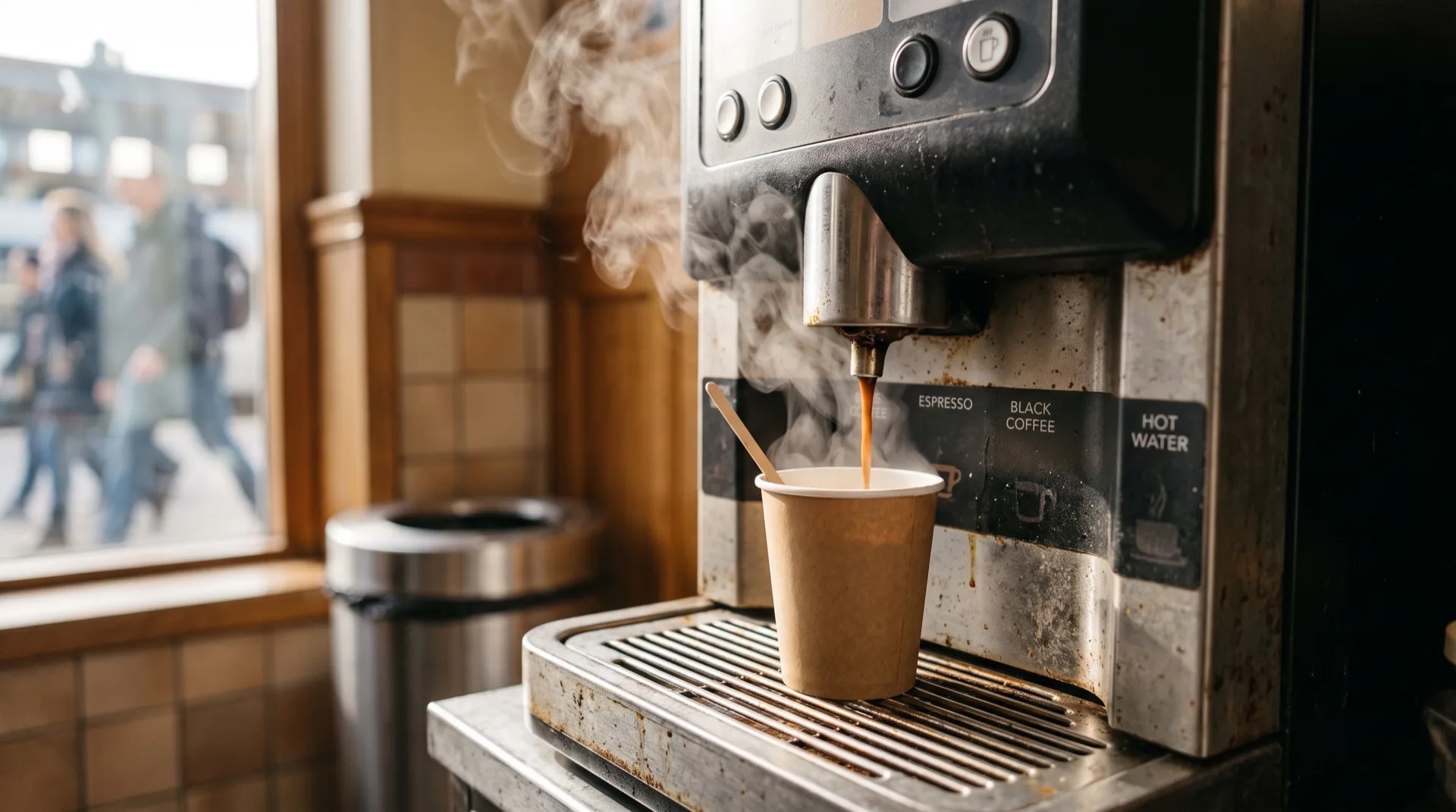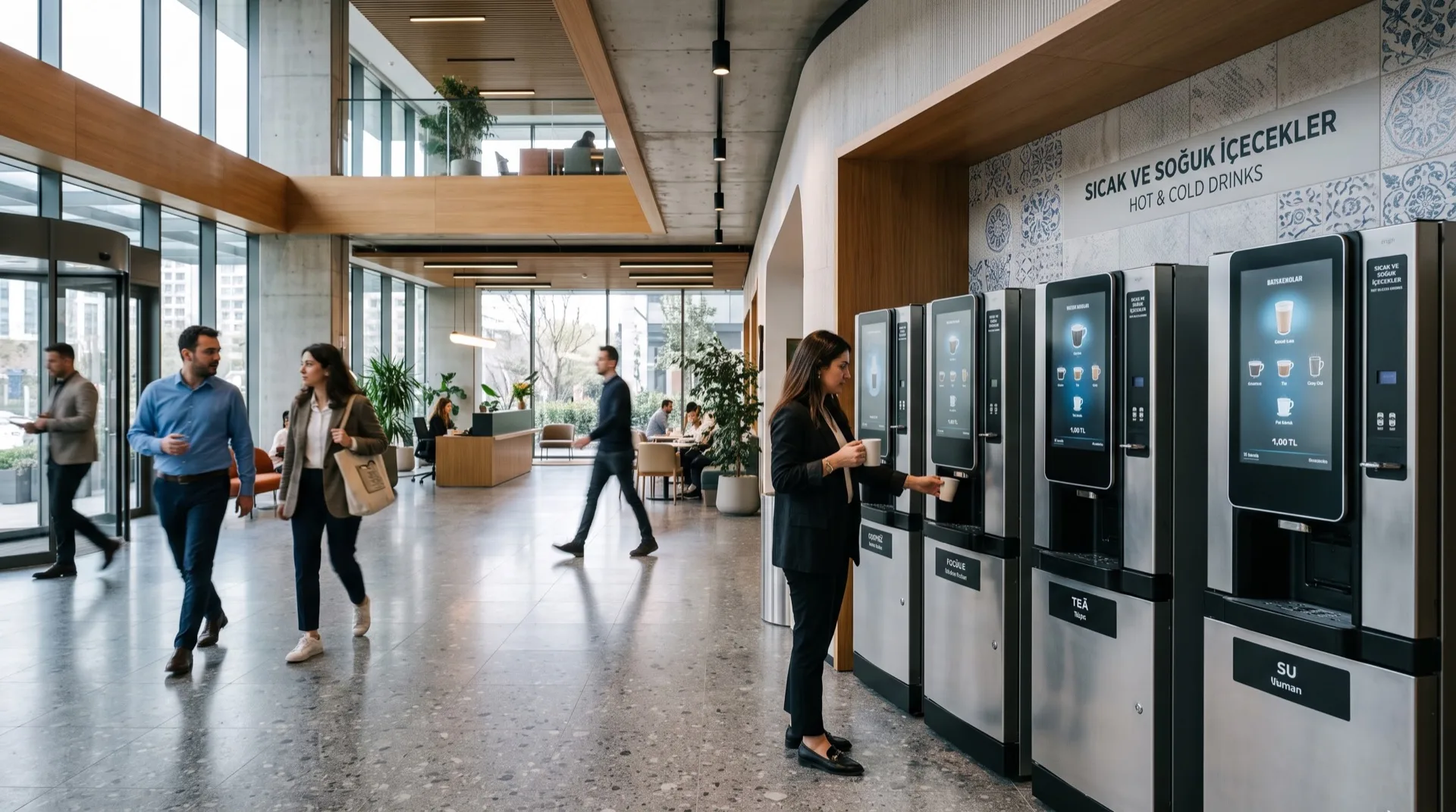
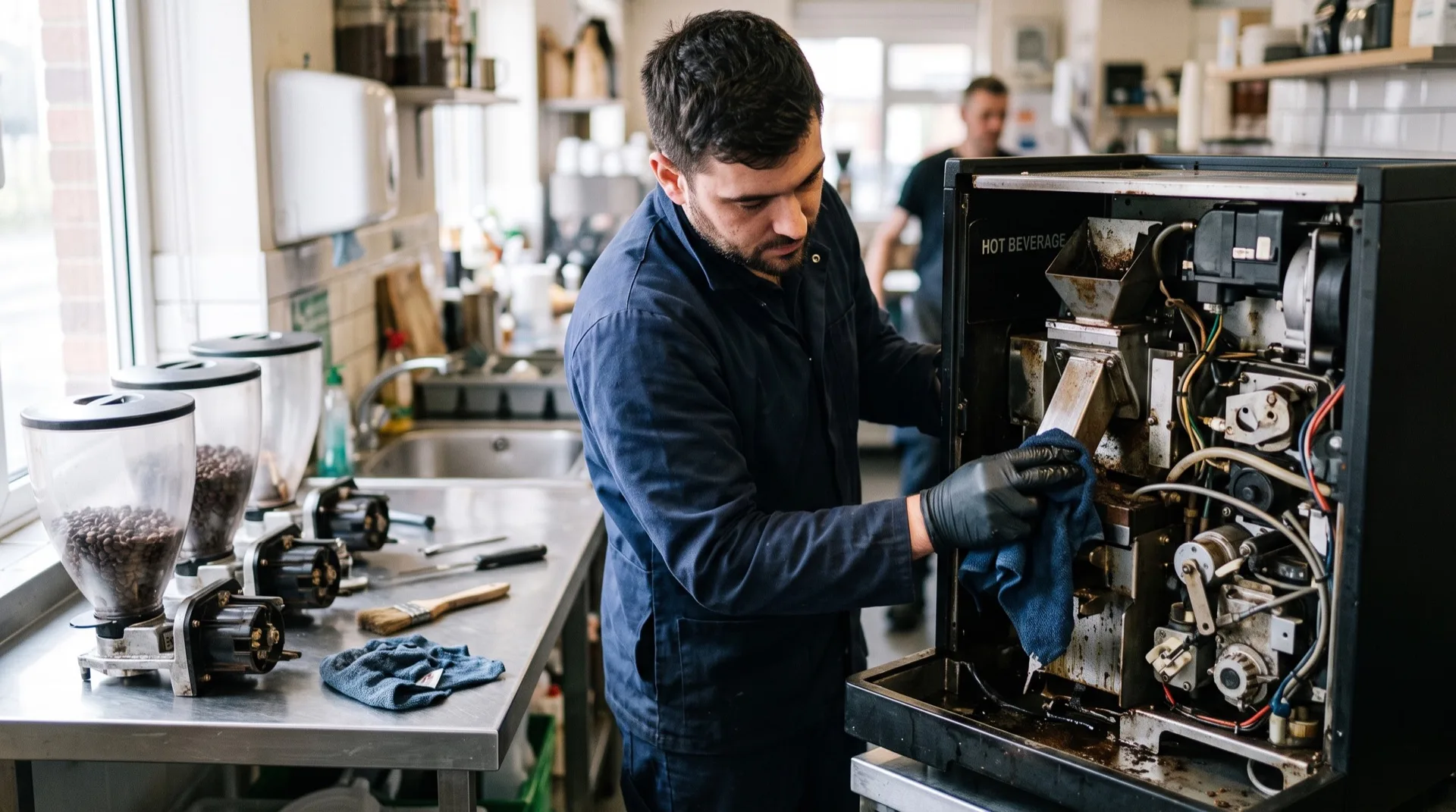
Coffee vending machine maintenance is the routine of keeping the machine clean, the water soft, the milk path hygienic and the grinder working, so every cup tastes the same on Monday morning as it did on Friday afternoon. Most of the work takes a few minutes a day. The rest is scheduled, and on a modern machine such as the Jetinno JL300 much of it runs itself through automatic rinsing cycles. This checklist covers what to do daily, weekly and monthly, who is responsible under rental versus purchase, the mistakes that shorten machine life, and the point at which you should stop troubleshooting and call an engineer.
Why coffee vending machine maintenance decides your cup cost
A machine that is cleaned on schedule grinds consistently, doses consistently and steams consistently. A machine that is not starts drifting: weaker coffee, slower dispensing, a sour note in milk drinks, then a blocked line and a day of lost sales. Because the JL300 grinds beans per cup and also brews tea and hot chocolate, three separate paths need attention, not one. Left alone, coffee oils turn rancid in the brew group, milk protein hardens in the tubes, and scale builds quietly in the boiler until heating times stretch and the machine starts throwing errors.
Maintenance also protects the numbers. Cup cost sits around 12–20 and the sale price around 80–120, so a machine running 30–60 cups a day turns over roughly 90,000. Downtime is the only line item that erases that margin completely. If you are still choosing between owning and renting, the sale and rental of vending machines page explains how the two models split responsibility.
Daily tasks: five minutes that keep the taste stable
The daily routine is short and mostly about hygiene at the point of contact with the cup.
- Run the automatic rinse cycle at start-up and again at closing. On the JL300 this flushes the brew path and the mixer without dismantling anything.
- Empty the grounds container and the drip tray. A full tray is the most common cause of a machine shutting down mid-service.
- Wipe the touch screen, the dispensing area and the cup shelf with a damp cloth. Avoid spraying liquid directly at the panel.
- Check the bean hopper level and top it up. Never pour beans on top of old ones without a quick look for oil build-up on the hopper walls.
- Wipe the milk nozzle and rinse any milk parts that touch product. Milk residue is the fastest route to a smell complaint.
- Confirm the water tank or mains supply is full and that no error message is showing on screen.
If the machine takes coins, tokens, banknotes or cards, a quick daily glance at the payment slot keeps it from jamming on a bent coin. Machines configured as a coin operated tea and coffee vending machine live in exactly the same daily rhythm.
Weekly cleaning: hoppers, milk system and the outside of the machine
Once a week, go deeper than the surface. Remove the bean hopper and wash it with warm water and a mild detergent, then dry it fully before refilling. Any moisture in the hopper makes beans stick and the grinder dose unevenly. Do the same for the instant canisters if the machine is configured for chocolate or tea.
The milk system deserves the most attention. If you use fresh milk, flush the milk line with clean water at the end of every day and run a proper cleaning cycle weekly with a milk-system cleaner approved for food contact. Powdered milk is more forgiving but still leaves residue in the whipper. Take the whipper apart, rinse it, and check the small air intake for blockages. A blocked air intake produces flat, barely foamed milk, which customers notice before anything else.
Weekly is also the right moment to check the brew group seals, look for leaks under the machine, and clean the ventilation grilles so the electronics do not run hot.
Monthly and quarterly: descaling, water filter and grinder burrs
Scale is the slow killer. It forms in proportion to water hardness, so the descaling interval depends on your water, not on the calendar. In hard-water areas of Turkey, monthly descaling is realistic; with a good filter and softer water, quarterly is often enough. Use a descaling agent intended for coffee machines, follow the dilution, and always run two full rinse cycles afterwards. Skipping the rinse leaves acid in the boiler and you will taste it in the first cup of the day.
The water filter is the cheapest insurance you can buy. Replace the cartridge on the manufacturer’s interval or when the machine’s own indicator tells you to. A spent filter passes scale straight into the boiler and shortens the life of the heating element.
Grinder burrs typically last a long time in a vending environment, but they do wear. If shots get faster, the puck looks coarse, or you keep tightening the grind setting, ask an engineer to inspect the burrs rather than compensating with settings alone.
Who does what under rental versus purchase
This is where the two business models differ most, and it is worth being clear before you sign anything.
| Task | Rental (location partnership) | Purchase |
|---|---|---|
| Daily rinse, tray and hopper checks | Location staff | Owner or location staff |
| Weekly milk system and hopper cleaning | Location staff, with guidance from CoffeeVar | Owner or assigned staff |
| Descaling, filter change, technical service | CoffeeVar | Owner schedules it, CoffeeVar delivers it |
| Investment and consumables | 0 investment, location receives 20% of sales, about 18,000 a month at typical traffic | Machine at 7,200 USD for the JL300, consumables on the owner |
| Contract and reporting | 2-year contract, sales visible online | Ownership, with telemetry and remote monitoring available |
Under rental, CoffeeVar installs and operates the machine and the location simply keeps the surrounding area clean and reports anything unusual. Under purchase, the owner carries the technical calendar, though the JL300’s telemetry and remote monitoring make that easier because faults and consumption are visible before they become breakdowns. The 2-year warranty applies either way. To compare the numbers for your own traffic, the coffee vending machine calculator is the quickest route.
Typical mistakes and how much time it really takes
The most common errors are consistent across locations. People rinse the milk line but not the whipper. They descale without rinsing properly. They refill the hopper over old beans. They wipe the screen with a wet cloth and wonder why the panel stops responding. They ignore a small leak until it reaches the electronics. They also postpone the water filter because the machine still works, which is exactly how scale gets into the boiler.
Realistic time commitment: five to ten minutes a day, twenty to thirty minutes a week, and about an hour a month for descaling and filter work. Under rental that monthly hour is ours, not yours.
When to call an engineer
Call for service when the machine reports a boiler or heating error, when water appears under the unit, when the grinder makes an unusual noise or the grind no longer adjusts, when dispensing slows noticeably after descaling, or when a payment module stops accepting coins or cards. Also call if the same fault returns twice after a reset. These are not cleaning issues and trying to fix them by repeated rinsing wastes product and risks the warranty. CoffeeVar delivers and installs across Turkey within about 72 hours after contract, with service engineers in the main cities.
Conclusion
Coffee vending machine maintenance is mostly discipline: rinse daily, clean the milk path weekly, descale and change the filter monthly, and leave the technical work to people who do it every day. Do that and the machine keeps pouring the same cup for years. You can see the full range in the coffee machine catalog, compare costs on the coffee machine prices page, or reach us directly through contacts at +90 537 356 84 24 and im@coffeevar.com.tr.