The short answer to “rent or buy a coffee vending machine” depends on who you are. If you run a business that wants coffee without spending capital, renting a coffee vending machine through a location partnership is usually the better route. If you want to sell coffee as a business, buying gives you the full margin. Everything else, from who refills the machine to who carries the risk, follows from that one question.
What you actually pay for when you buy a coffee vending machine
Buying means you purchase the machine outright. For the Jetinno JL300, the price is 7,200 USD. That figure covers the hardware, installation and a 2-year warranty, and after that the machine is yours. You also take on the running costs: beans, tea, chocolate powder, cups, milk, sugar, water and electricity, plus the servicing and any repairs outside the warranty.
On the plus side, every lira a customer puts in the machine is yours. There is no revenue share, no partner to pay and no contract limiting where you place the machine. You decide the cup price, the recipe list and the opening hours. If you already have a location with steady footfall, that full margin is the whole point of buying.
Current coffee machine prices and configurations are listed on our site, including versions with a water tank for locations without a plumbed supply.
What renting a coffee vending machine really means
Rental here is not a classic equipment lease. It is a location partnership. You provide the space and the socket, and CoffeeVar installs and operates the machine. Your investment is zero. You do not buy beans, cups or cleaning materials, and you do not pay for service calls.
In return, you receive 20% of sales. At typical traffic that works out to roughly 18,000 per month for the location, with the numbers visible online so you can check them whenever you want. The contract runs for 2 years.
This model suits locations that want the amenity without the work: offices, clinics, factories, student buildings, waiting areas. You get a machine that grinds beans per cup and also brews tea and hot chocolate, without adding a single item to your operating budget.
Who operates, who refills, who services
This is where the two models separate most clearly.
- Buying: you own the machine, you or your staff restock it, you arrange cleaning and you call a service engineer when something breaks. You can also hire someone, but the responsibility stays with you.
- Renting: CoffeeVar handles refilling, cleaning, consumables and service. You give access to the location and receive your share of sales.
In practice, the operational burden is the hidden cost of ownership. A machine that runs out of cups on a Friday afternoon is a lost weekend of sales, and someone has to notice.
Income: a share or the full margin
With a purchase, your margin is the sale price minus the cup cost. With the JL300, the cup cost is 12–20 and the sale price is 80–120. At a typical 30–60 cups a day, turnover is around 90,000 and the payback period on the machine is 6–12. Those are your numbers, start to finish.
With rental, the same machine might sell the same cups at the same price, but the location receives 20% of that turnover instead of the full amount. The trade is straightforward: less income per cup, no capital, no operating costs and no service risk.
Comparison table
| Point | Buy | Rent (location partnership) |
|---|---|---|
| Upfront investment | 7,200 USD for the JL300 | 0 |
| Who operates | You | CoffeeVar |
| Who refills and services | You | CoffeeVar |
| Income per cup | Full margin: 80–120 minus 12–20 | 20% of sales |
| Typical monthly result | Turnover about 90,000, payback 6–12 | About 18,000 |
| Contract | None beyond warranty | 2 years |
| Main risk | You carry demand and service risk | You depend on the operator’s performance |
If you want to model your own traffic before deciding, the coffee vending machine calculator does the arithmetic for both routes.
When buying makes sense
Buying makes sense when coffee is part of your business rather than a convenience for your visitors. A cafe extension, a busy canteen, an office park with several hundred people, a dealership or a hospital corridor with constant footfall can all justify the investment. You control pricing, you keep the margin, and over time the machine pays for itself.
It also makes sense if you already have staff on site who can restock and clean, and if you are comfortable handling a service call now and then. If you want to see what the hardware can do, the coffee machine catalog covers the range, including models that brew both tea and coffee from the same unit.
When renting makes sense
Renting makes sense when you want the service without the business. An office manager does not want to order cups, track bean stock or chase a technician. A clinic wants patients to have something hot while they wait, not a second supply chain to manage. A landlord wants an amenity in the lobby without adding a line to the budget.
Renting also makes sense if you are unsure about demand. You commit to a 2-year contract, but you commit no money, and the sales figures are visible online, so you can see whether the location performs before considering a purchase later.
Conclusion
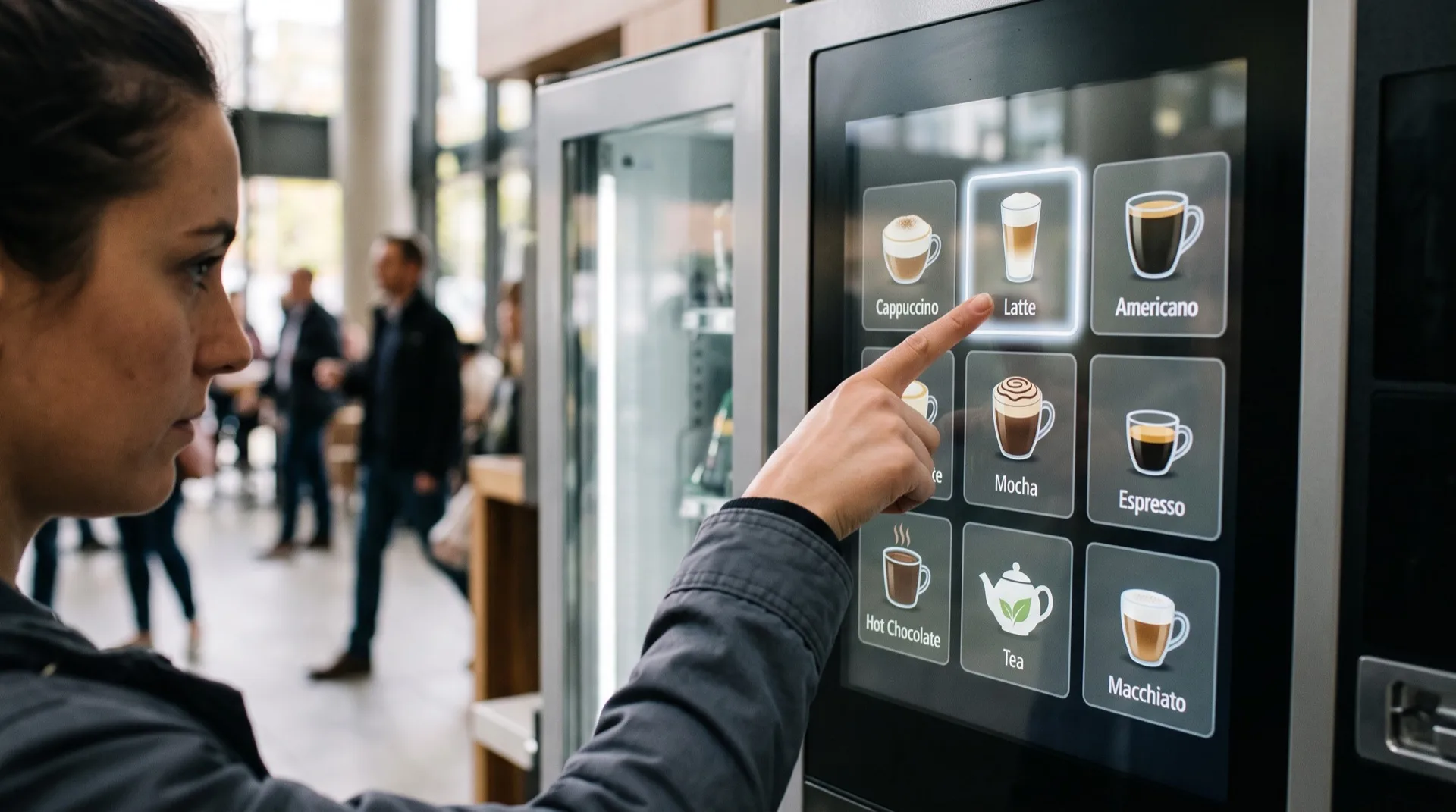
The question is not which model is better in general, but which one fits your role. If you sell coffee, buy and keep the margin. If you host people and want coffee on site without capital or admin, rent and take the share. Both routes use the same Jetinno hardware, including the JL300 with its touch screen and telemetry, and both are installed across Turkey within about 72 hours after the contract.
To compare the two options for your own location, start with our sale and rental of vending machines page, or call +90 537 356 84 24 and we will work through the numbers with you.